By: David S. Johnson | Staff Reporter | www.thepointafricanews.com | OP-ED
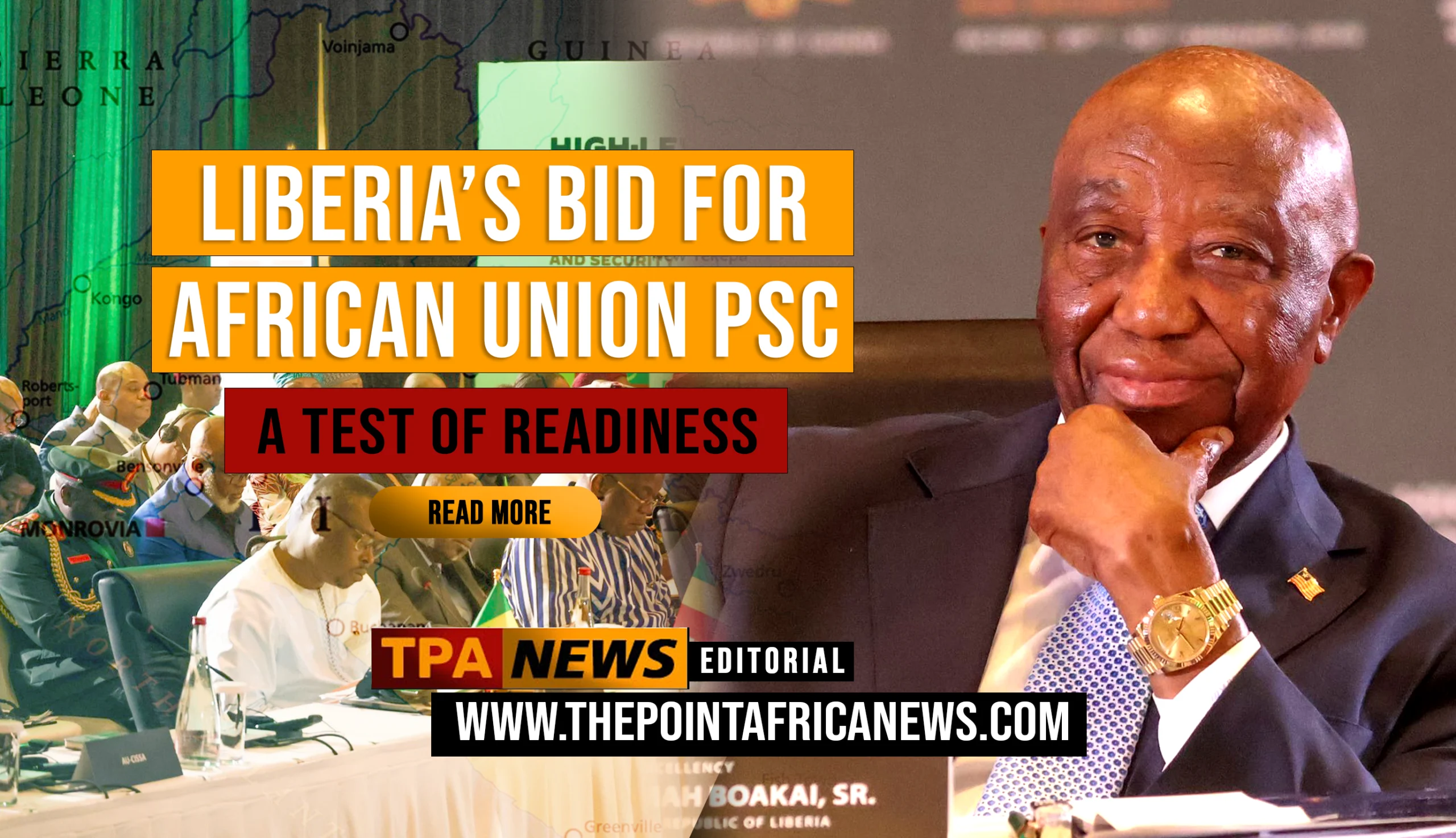
As Liberia seeks election to the African Union Peace and Security Council for the 2026–2028 term, the move underscores both the country’s aspirations and the unresolved challenges that could define its success—or expose its limitations—if elected.
Having emerged from two devastating civil wars and navigated more than two decades of post-conflict recovery, the country presents itself as a state shaped by the lived experience of conflict resolution, reconciliation, and democratic transition. While this history lends moral authority to Liberia’s bid, the candidacy also invites closer scrutiny of the country’s preparedness to shoulder the demanding responsibilities of the PSC.
A central concern relates to Liberia’s domestic security and institutional capacity. Although the country has maintained relative stability since the end of the civil war in 2003, its security architecture remains limited in scale and operational depth. The Armed Forces of Liberia are small and primarily oriented toward territorial defense, with minimal recent experience in leading or substantially contributing to African Union–mandated peace operations. Unlike regional powers such as Nigeria or Ethiopia, which routinely deploy troops and senior commanders to AU missions, Liberia’s security institutions have not been deeply embedded in contemporary peace enforcement or stabilization efforts. This reality may constrain Liberia’s ability to shape technically complex PSC discussions on issues such as counter-terrorism, transnational insurgency, and hybrid security threats.
Internal fragility also continues to shape perceptions of Liberia’s readiness for a continental security leadership role. While the country has recorded peaceful transfers of power since 2005, electoral cycles have periodically exposed institutional weaknesses and public distrust, including disputes over results, logistical challenges, and episodes of protest. High levels of youth unemployment and economic vulnerability remain persistent structural risks, particularly in urban areas where social pressure can escalate quickly. In addition, Liberia’s porous borders with Guinea, Côte d’Ivoire, and Sierra Leone expose it to cross-border criminal activity, including illicit mining, logging, and trafficking. These dynamics, while not unique to Liberia, raise questions among observers about whether a state still consolidating its own stability can credibly serve as an arbiter or guide on broader continental security challenges.
Financial and logistical constraints present another significant hurdle. Active and influential participation in the PSC requires sustained diplomatic engagement, technical expertise, and rapid responsiveness to emerging crises. Maintaining a strong and specialized diplomatic presence in Addis Ababa, where the African Union is headquartered, places considerable strain on Liberia’s foreign service resources. PSC members are often expected to contribute to mediation initiatives, fact-finding missions, and emergency consultations, all of which demand funding and operational readiness. For a country managing high development needs, debt obligations, and limited fiscal space, balancing these international commitments with domestic priorities remains a delicate challenge.
Liberia’s relative influence within high-level security negotiations is also shaped by the political economy of the PSC itself. Deliberations within the council are frequently driven by states with substantial military capacity, economic leverage, or strategic weight, such as Nigeria, South Africa, Algeria, and Egypt. These countries often set the tone on sanctions, peace enforcement mandates, and counter-terrorism strategies. Liberia, lacking a strong defense-industrial base or a significant regional military footprint, risks being marginalized unless it builds strategic alliances and positions itself as a consensus broker. Without deliberate coalition-building, its role on the PSC could become procedural rather than agenda-setting.
Perception remains an additional, less tangible constraint. Despite its democratic gains, Liberia is still widely viewed through a post-conflict lens. The long presence of the United Nations Mission in Liberia, which only concluded in 2018, continues to shape narratives of external dependency for security stabilization. Liberia is often cited as a beneficiary of peacekeeping rather than a contributor to continental security provision. In comparison with countries that have successfully rebranded themselves as peace and security exporters, Liberia has been slower to reposition its international image, a factor that can subtly influence diplomatic dynamics within the African Union. Taken together, these constraints do not invalidate Liberia’s candidacy for the Peace and Security Council, but they underscore the scale of the challenge ahead. The country’s bid is grounded in legitimate aspirations and a compelling peacebuilding narrative, yet effective PSC membership demands more than symbolism. It requires institutional strength, sustained resources, diplomatic agility, and a clear strategy for influence. Whether Liberia’s tenure, if elected, becomes a platform for meaningful contribution or a test of overstretched capacity will depend on how decisively it addresses these structural and perceptual gaps in the years ahead.