By: TPA NewsDesk | [email protected] | Opinion Editorial
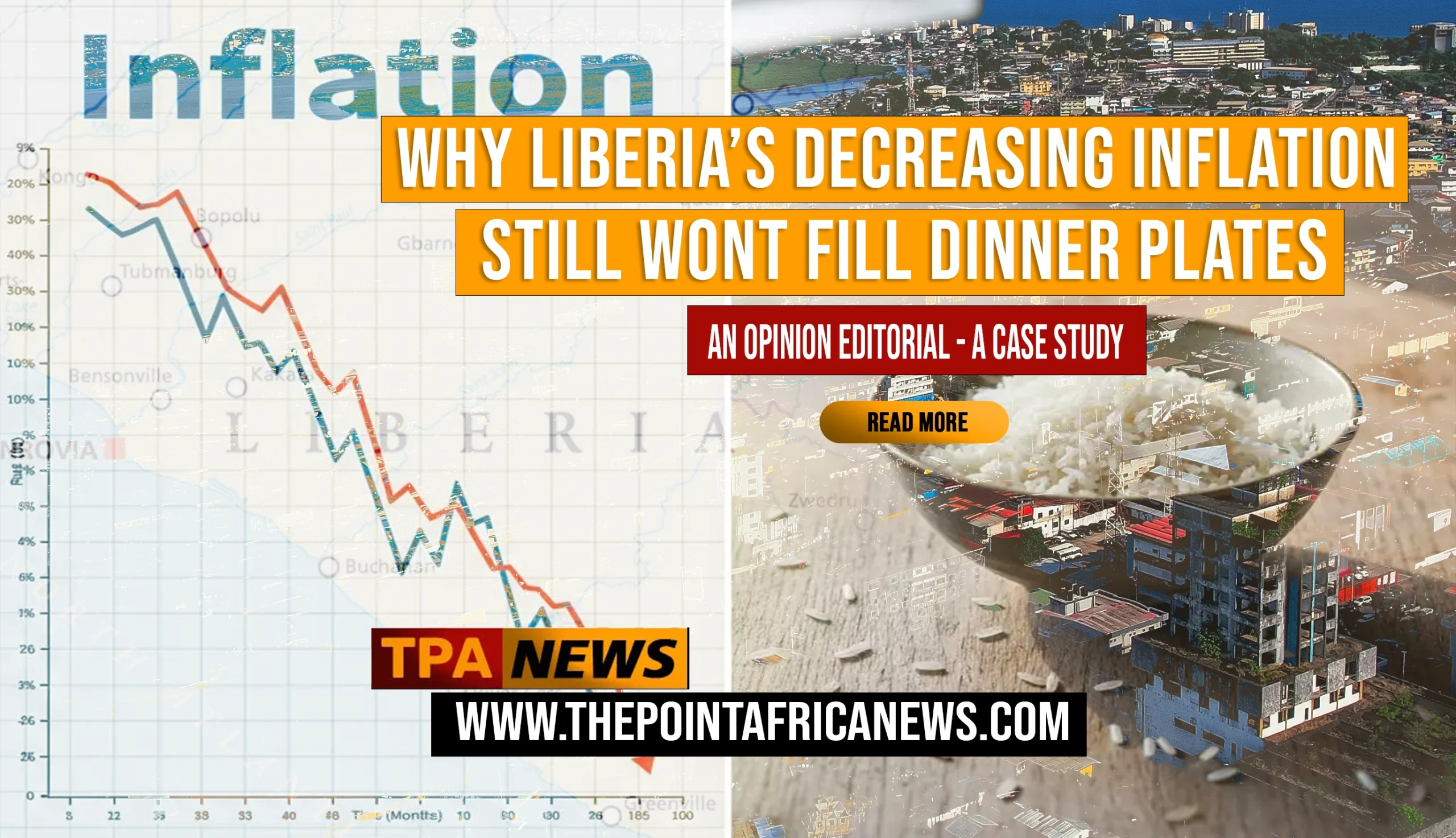
MONROVIA – The headlines from the Central Bank of Liberia (CBL) this February carry a tone of quiet triumph. According to the latest Monetary Policy Communiqué (No. 25), headline inflation has plummeted to a single-digit average of 4.4% in the final quarter of 2025—a staggering drop from the double-digit pressures of previous years. On paper, the IMF confirms that Liberia’s economy is “strengthening,” with a projected GDP growth of 5.1% to 5.4% for 2026.
But walk into the Duala Market or navigate the stalls at Red Light, and the “triumph” feels like a lie. If the economy is growing and inflation is falling, why does the “plate of rice” feel smaller? Why are Liberian families still choosing between school fees and a full meal?
The answer lies in the difference between economic data and purchasing power. To understand why the “Macro” isn’t meeting the “Micro,” we must look at the three analogies of our current crisis.
The most dangerous misunderstanding in our national discourse is the difference between Disinflation and Deflation.
Imagine a car (prices) speeding toward a cliff at 100 miles per hour. If the driver slows down to 40 mph, the car is technically “slowing its acceleration.” That is what a 4.4% inflation rate represents. However, the car is still moving toward the cliff. Prices are still rising—they are just rising more slowly than they were last year.
Lower inflation does not mean prices are “dropping”; it means they are simply not “exploding” as fast. For a family whose income has remained stagnant for three years, a “slower increase” is still an increase they cannot afford.
Economists talk about “Sticky Prices.” When global fuel prices drop or the CBL stabilizes the exchange rate (currently hovering around L$185 to US$1), we expect the price of bread or oil to drop the next day. It never does.
Why? Because the merchant at the shop bought their stock three months ago when the rate was volatile. They will not lower their prices until they have squeezed every cent of profit out of that “expensive” inventory. Furthermore, our infrastructure—the literal mud on our roads—acts as a hidden tax. If it costs a truck twice as much to reach a rural market due to poor roads, that “transportation tax” keeps the price of a bitter ball high, regardless of what the Central Bank in Monrovia says about inflation.
The IMF’s projected 5.1% GDP growth is driven largely by mining and exports. While gold and iron ore exports look great on a balance sheet, they don’t put a shovel in the hands of the average Liberian.
This is “Jobless Growth.” The wealth generated in the mines of Nimba or Grand Cape Mount often bypasses the local dinner table entirely. As noted in the World Bank’s recent Economic Update, until Liberia shifts from “Stabilization to Inclusion”—specifically through agro-processing and local manufacturing—the GDP will continue to grow while the people continue to groan.
The Central Bank of Liberia has done its job in stabilizing the rafters of the house. But the house is still empty.
Decreasing inflation is a necessary foundation, but it is not a meal. We cannot eat a “Communique.” Until the government moves beyond monetary policy and begins aggressively tackling the “Cost of Doing Business”—fixing the electricity grid, paving the farm-to-market roads, and incentivizing local rice production—the dinner plates of Monrovia will remain half-empty.
Macroeconomic stability is a win for the books. Now, we need a win for the belly.