By: David S. Johnson – Staff Reporter | [email protected] | UN Assembly
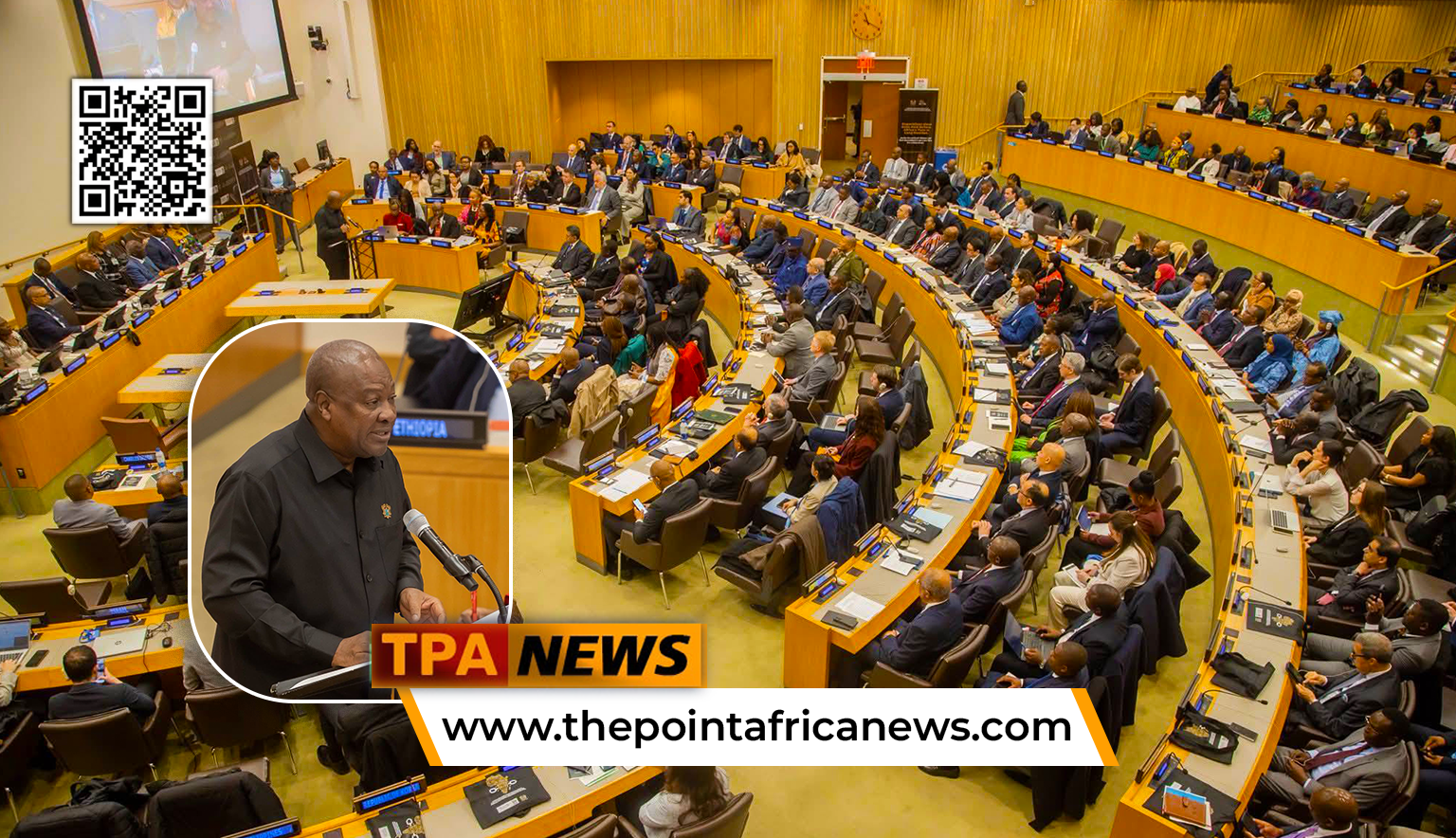
Accra, Ghana / United Nations, New York — A landmark resolution led by Ghana at the United Nations General Assembly has been adopted, formally recognizing the trans-Atlantic trafficking and enslavement of Africans as the “gravest crime against humanity.” The vote took place on March 25, 2026, coinciding with the International Day of Remembrance of the Victims of Slavery and the Trans-Atlantic Slave Trade.
The resolution secured 123 votes in favor, with three countries — the United States, Israel, and Argentina — voting against it, while 52 nations, including the United Kingdom and several European Union member states, abstained. Unlike Security Council measures, General Assembly resolutions are not legally binding, but they carry significant political and moral weight as reflections of global opinion.
Ghana’s delegation, led by President John Dramani Mahama and Foreign Minister Samuel Okudzeto Ablakwa, championed the resolution as a long-overdue step toward historical truth, justice, and reparative dialogue. Speaking before the vote, President Mahama described the resolution as necessary to safeguard history against forgetting and to lay a foundation for healing. The initiative enjoyed broad backing from the African Union and Caribbean Community (CARICOM) nations, which have long advocated for international acknowledgment of the trans-Atlantic slave trade’s human toll and economic legacy.
The adopted text of the resolution unequivocally condemns the trafficking of enslaved Africans and the trans-Atlantic slave trade as the gravest crime against humanity. It calls for measures emphasizing education, historical remembrance, and justice-oriented action, while urging formal apologies, restitution of cultural artifacts, and initiatives to address systemic racial disparities rooted in centuries of exploitation. While the resolution does not itself create legally binding obligations for reparations, it encourages further international dialogue on appropriate remedies, including apology, restitution, and structural reforms.
Experts say that although the resolution is largely symbolic, it may shape international discourse on historical accountability and influence future legal frameworks, education policies, and reparative initiatives. Critics, primarily among Western nations, argued that the resolution could create a hierarchy of crimes against humanity or place disproportionate historic responsibility on modern states and institutions that did not exist during the era of the slave trade.
Ghana’s push builds on decades of Pan-African and Caribbean advocacy, including earlier declarations such as the 1993 Abuja Proclamation and the 2023 Accra Proclamation on Reparations, which sought formal recognition of the trans-Atlantic slave trade’s enduring impacts. The adoption of the resolution marks a rare moment of global recognition of the trans-Atlantic slave trade’s historical crimes at the United Nations. While not legally binding, it signals a broad and symbolic international consensus on the need to confront historical injustices and lays the groundwork for ongoing reparative engagement.

David S Johnson
David S. Johnson is a seasoned Liberian investigative journalist and multimedia professional who has been active in the media industry since 2016. After serving in various reporting and administrative roles for several prominent local news outlets, he transitioned into media ownership as the founder of The Point Africa News and Media Consultancy Agency Inc. Based in Monrovia, his registered agency provides a comprehensive blend of local, regional, and global news coverage.