
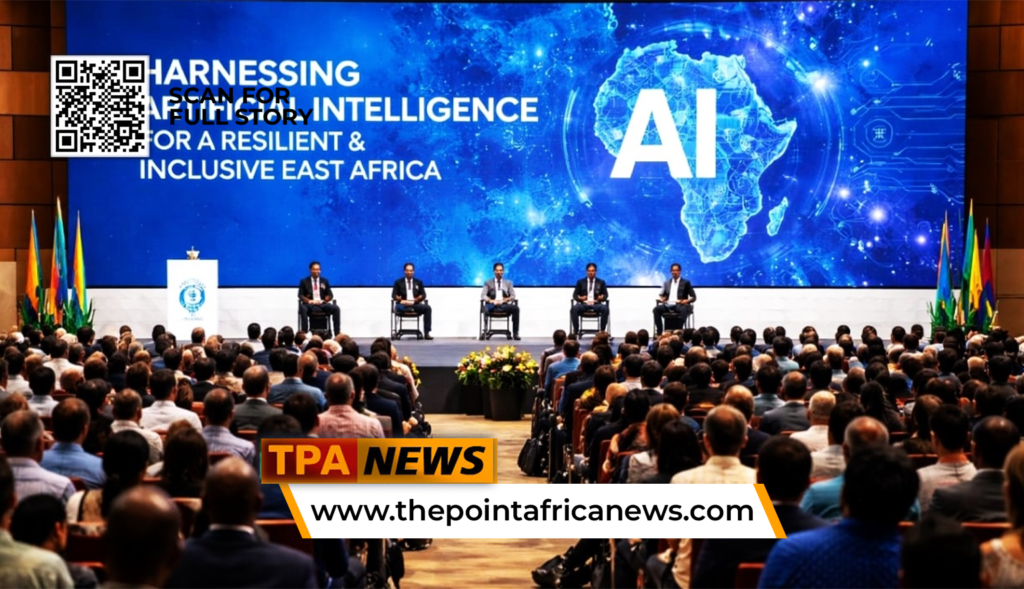
Leaders, researchers, and policymakers from across the East African Community have convened in Kigali for the 4th Regional Science, Technology and Innovation (STI) Conference, placing artificial intelligence at the center of the region’s development agenda.
The conference—organized by the East African Science and Technology Commission in partnership with the Inter-University Council for East Africa—is the first in the bloc’s history to focus entirely on artificial intelligence, under the theme of harnessing responsible AI for regional transformation.
At the core of the summit is a growing urgency: how East Africa can position itself not just as a consumer of AI technologies, but as a contributor to their development.
According to conference organizers and official briefings, discussions have centered on AI’s potential across key sectors, including agriculture, health, education, climate resilience, and public service delivery.
However, participants have also pointed to critical structural constraints that could slow that ambition.
Conference materials and policy dialogues highlight persistent challenges, including limited technical capacity, fragmented digital infrastructure, low investment in research, and gaps in governance and regulatory frameworks—all of which risk undermining the region’s ability to scale AI solutions effectively.
The emphasis on universities has been particularly strong. With higher education institutions expected to anchor innovation, stakeholders note that many remain under-resourced and insufficiently aligned with emerging technological demands, raising concerns about the region’s long-term talent pipeline.
Beyond technical capacity, the summit has also focused on policy coordination and ethical governance, as the EAC works toward shaping a regional artificial intelligence strategy that prioritizes inclusive growth and responsible deployment.