By: Staff Reporter | editor@thepointafricanews.com | Economy News | Africa
MONROVIA — From electricity rationing to rising fuel prices, African countries heavily dependent on imported petroleum products are facing growing economic strain, as global energy disruptions expose long-standing structural weaknesses.
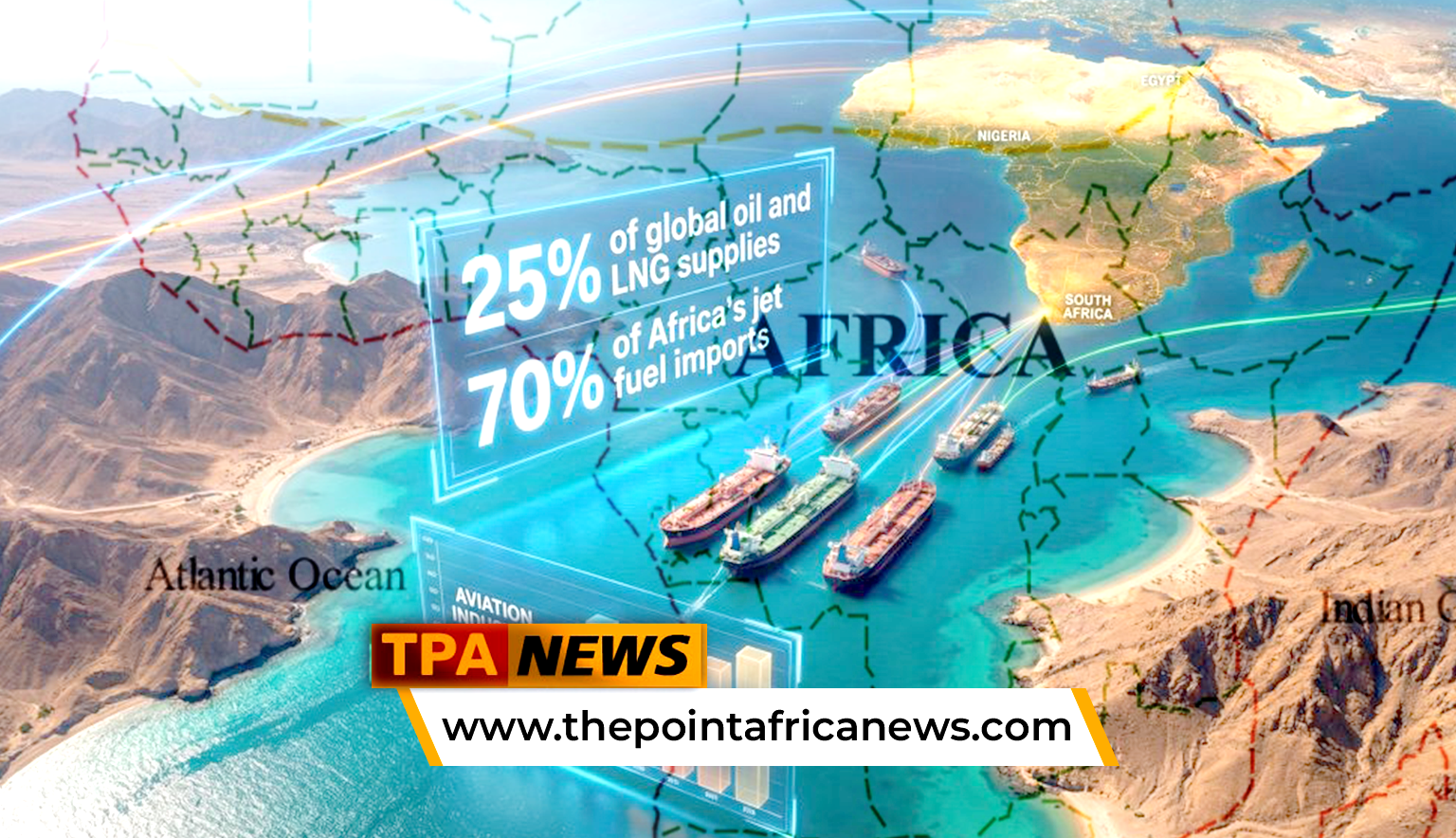
Recent data and analysis from international financial institutions and regional bodies show that many African economies remain highly vulnerable to external shocks due to their reliance on imported refined fuel. A joint report involving multilateral institutions, including the African Development Bank and United Nations agencies, warns that disruptions in the Middle East—one of Africa’s key energy supply regions—could slow economic growth across the continent and trigger a broader cost-of-living crisis driven by higher fuel and food prices.
The Middle East accounts for a significant share of Africa’s trade, with roughly 15.8 percent of imports linked to the region, underscoring the continent’s exposure to supply disruptions. Despite being a major producer of crude oil, Africa continues to import a large portion of its refined petroleum due to limited domestic processing capacity.
According to estimates from the African Export-Import Bank, the continent spends about $30 billion annually on importing petroleum products, reflecting the cost of insufficient refining infrastructure.
This structural gap means that even oil-producing countries remain dependent on external suppliers for usable fuel. In countries like Nigeria, for example, crude oil is exported while refined products are imported due to inadequate refining capacity, creating a costly and inefficient cycle.
Rising global oil prices are translating directly into domestic economic stress across African economies. Fuel price increases are pushing up transportation and food costs, contributing to inflation and eroding household purchasing power. Analysts warn that such shocks can increase inflation by 1 to 3 percentage points in fuel-importing countries, particularly in East and West Africa.
In several countries, higher fuel costs have also affected electricity generation, especially where diesel-powered systems are widely used, leading to intermittent power supply and forced rationing. Governments are facing difficult policy choices, balancing the need to maintain fuel subsidies to protect citizens against the growing fiscal burden such measures impose.
World Bank data shows that many African economies remain heavily dependent on imports more broadly, with some countries importing goods equivalent to a large share of their GDP. This dependence increases exposure to global price volatility and supply chain disruptions. Energy imports are a critical part of this vulnerability. In countries with limited industrial capacity, fuel is essential not only for transportation but also for electricity generation and basic economic activity.
As a result, external shocks—whether geopolitical tensions or supply disruptions—quickly translate into domestic economic instability. The broader implication, according to economists and development institutions, is that Africa’s current energy model leaves it structurally exposed.
Fuel-importing countries account for a significant share of economic activity in Sub-Saharan Africa, meaning that rising oil prices can have continent-wide consequences, slowing growth and increasing macroeconomic pressure. Without substantial investment in local refining capacity, energy diversification, and regional supply chains, experts warn that the cycle of vulnerability will persist.
While some oil-exporting nations may benefit from higher prices, the majority of African economies—particularly net importers—face worsening fiscal and social pressures.
As global energy markets remain volatile, the situation is raising urgent questions about Africa’s path toward energy independence and long-term economic resilience.

David S Johnson
David S. Johnson is a seasoned Liberian investigative journalist and multimedia professional who has been active in the media industry since 2016. After serving in various reporting and administrative roles for several prominent local news outlets, he transitioned into media ownership as the founder of The Point Africa News and Media Consultancy Agency Inc. Based in Monrovia, his registered agency provides a comprehensive blend of local, regional, and global news coverage.