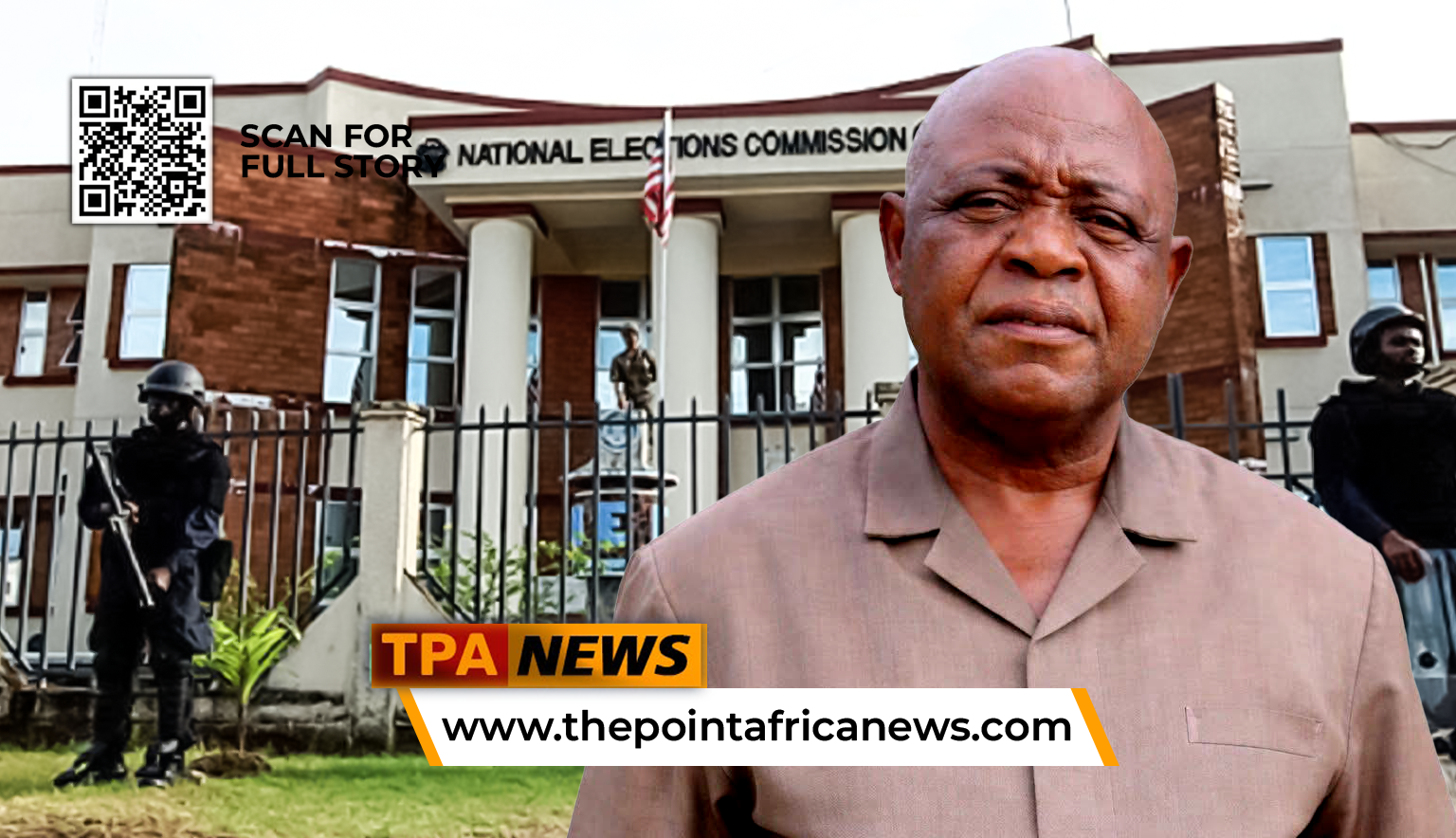
Monrovia, Liberia — President Joseph Nyuma Boakai’s nomination of veteran election official Jonathan K. Weedor to chair the National Elections Commission (NEC) is being framed as a stabilizing move. But beneath the surface, it raises a more complicated question: is Liberia opting for reform—or recycling its past?
The nomination follows the resignation of former NEC Chair Davidetta Browne-Lansanah, creating a leadership vacuum at a time when public confidence in electoral systems across the region is increasingly fragile. In response, the administration has turned to a familiar face—one with nearly two decades inside the very institution he is now being asked to reform.
Weedor’s credentials are difficult to dismiss. Sixteen years at the NEC, including oversight of finance, procurement, and human resources, give him a level of institutional knowledge few can match. His involvement in regional election observation missions with the African Union and ECOWAS adds an international layer to his profile.
But it is precisely this deep institutional embedding that invites scrutiny.
Liberia’s elections body is not starting from a blank slate. It carries longstanding concerns around procurement transparency, operational inefficiencies, and public trust—issues that developed, in part, during the same era in which Weedor was a central figure. His nomination, therefore, presents a paradox: can someone who helped manage the system be expected to fundamentally change it?
The Boakai administration appears to believe so. Officials describe the move as strategic, emphasizing Weedor’s experience and neutrality as key assets in navigating the NEC through a period that demands both credibility and modernization. With increasing pressure to digitize voter systems and counter misinformation, the Commission is expected to evolve into a more technologically capable and transparent institution.
Yet critics argue that experience alone does not equal reform.
Among the more pointed voices is civil society advocate Anderson Miamen, who, while acknowledging Weedor’s qualifications, has raised concerns about the perception of independence surrounding the nomination. Miamen points to circulating claims suggesting possible ties between the nominee and the ruling Unity Party, warning that even unverified perceptions of political alignment could undermine confidence in the NEC.
His argument goes beyond the individual. For Miamen, Liberia’s electoral credibility hinges not only on competence, but on public trust that is “visible and unquestionable.” He questions whether the administration sufficiently explored alternative candidates whose neutrality would not be subject to debate, stressing that the stakes for the NEC demand more than technical expertise.
Miamen also challenges the reliance on legal provisions that require commissioners to sever political affiliations upon appointment, arguing that such measures may satisfy the law but fall short of addressing deeper concerns about independence. In his view, neutrality should be established long before nomination—not assumed after it.
The criticism introduces a sharper dimension to what might otherwise be seen as a routine appointment. Elections in Liberia are not just administrative exercises; they are trust-driven processes where perception can shape legitimacy as much as performance.
Weedor’s pending confirmation by the Liberian Senate is therefore expected to go beyond a review of credentials. Lawmakers will likely probe how he intends to balance his deep institutional history with the demand for reform—and how he plans to address concerns about independence in an increasingly scrutinized political environment.
For now, the nomination signals a clear preference from the Executive Mansion: experience over experimentation. Whether that choice delivers stability or reinforces existing doubts may ultimately depend not just on what Weedor knows—but on how convincingly he can prove that the system he once served can be transformed under his leadership.

David S Johnson
David S. Johnson is a seasoned Liberian investigative journalist and multimedia professional who has been active in the media industry since 2016. After serving in various reporting and administrative roles for several prominent local news outlets, he transitioned into media ownership as the founder of The Point Africa News and Media Consultancy Agency Inc. Based in Monrovia, his registered agency provides a comprehensive blend of local, regional, and global news coverage.