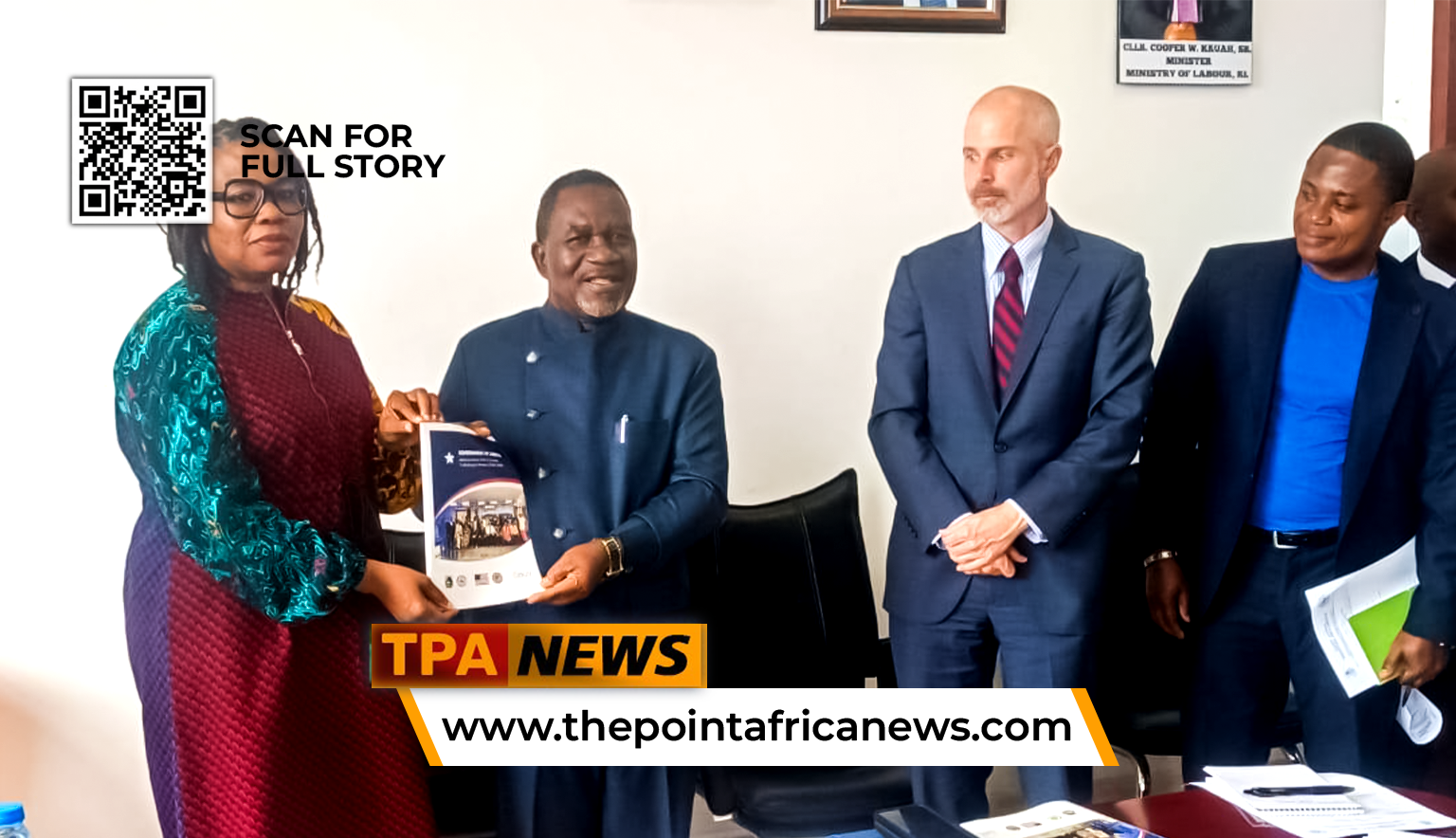
MONROVIA – Liberia on Tuesday launched its Third National Action Plan (NAP) aimed at combating human trafficking, signaling renewed government efforts to tackle a crime that has long threatened the country’s most vulnerable. The event, held at the Ministry of Labour, was presided over by the Chairman of the National Anti-Human Trafficking Taskforce, Labour Minister Cllr. Cooper W. Kruah, Sr., who called trafficking a “grave violation of human rights” and a “threat to the dignity, safety, and development of the Liberian people.”
The plan, which succeeds earlier strategies from 2014 and 2019, is structured around five pillars: prevention, protection, prosecution, partnership, and monitoring and evaluation. According to Minister Kruah, the initiative seeks to strengthen the capacity of law enforcement, labour inspectors, and other security personnel to more effectively investigate and prosecute cases of trafficking.
Despite progress under the 2019–2025 NAP, Liberia continues to face systemic challenges in identifying, prosecuting, and preventing human trafficking. The U.S. Trafficking in Persons Report has frequently highlighted the country’s struggles with enforcement capacity, rural vulnerability, and limited infrastructure for victim protection. Previous action plans recorded arrests and convictions, yet critics argue that implementation gaps have allowed trafficking networks to persist, particularly in remote counties like Grand Gedeh and Grand Cape Mount.
Minister Kruah emphasized that the new plan adopts a people-centered approach, focusing on prevention, protection, prosecution, and partnership. Key components include strengthening law enforcement capacity, enhancing coordination among ministries, and leveraging mobile and solar-powered solutions to support artisanal communities.
He highlighted achievements from previous initiatives, including the conviction of five women trafficking 14 children and ongoing investigations in high-risk counties. Development partners, notably the International Development Law Organization (IDLO), have been integral in shaping the plan, which aligns with Liberia’s ARREST Agenda for Inclusive Development.
While the NAP outlines ambitious targets, experts caution that Liberia’s structural weaknesses—limited police presence in remote areas, underfunded monitoring mechanisms, and fragmented inter-agency coordination—could undermine effectiveness. Civil society advocates emphasize the need for transparent reporting, independent oversight, and measurable outcomes, warning that public confidence may erode if promises are not backed by consistent enforcement.
If successfully implemented, the NAP could reduce trafficking of children and women, improve judicial outcomes, and strengthen Liberia’s international standing on human rights. Communities in high-risk counties stand to benefit from enhanced protection, while a more coordinated taskforce may deter potential traffickers.
However, enforcement gaps, bureaucratic bottlenecks, and limited resources remain pressing challenges. The NAP’s effectiveness will ultimately hinge on rigorous monitoring, accountability, and the active engagement of both local communities and international partners.
The Third National Action Plan is positioned as a five-year roadmap to strengthen Liberia’s anti-trafficking framework.

David S Johnson
David S. Johnson is a seasoned Liberian investigative journalist and multimedia professional who has been active in the media industry since 2016. After serving in various reporting and administrative roles for several prominent local news outlets, he transitioned into media ownership as the founder of The Point Africa News and Media Consultancy Agency Inc. Based in Monrovia, his registered agency provides a comprehensive blend of local, regional, and global news coverage.