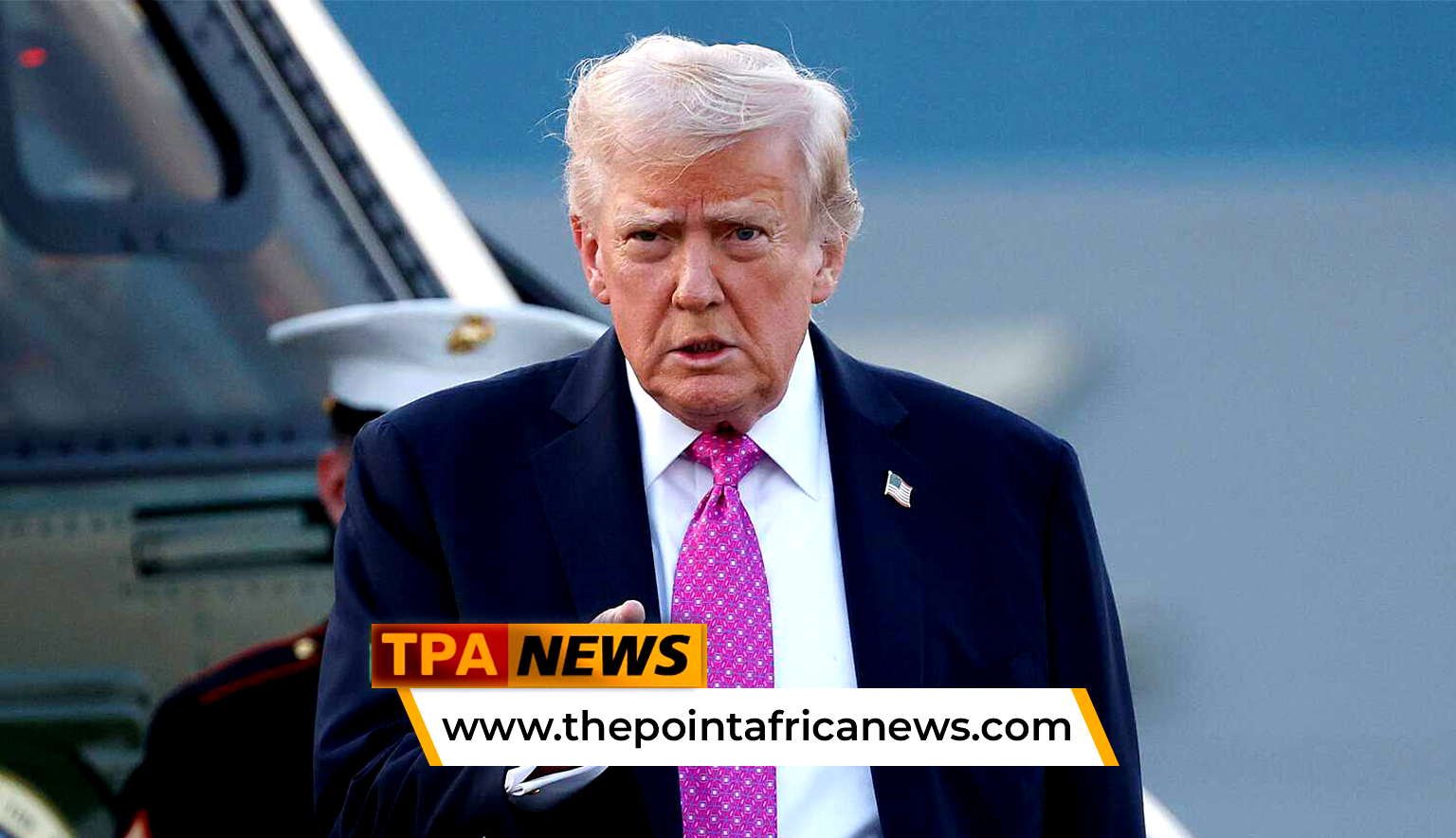
U.S. President Donald Trump has said he is strongly considering pulling the United States out of the North Atlantic Treaty Organization, describing the 77‑year‑old military alliance as a “paper tiger” and suggesting that an American withdrawal is now “beyond reconsideration,” according to an interview published with Britain’s Daily Telegraph.
Trump’s remarks reflect deepening frustration with European NATO allies who have refused to send warships to help reopen the Strait of Hormuz, a strategic shipping lane that has been effectively closed amid the ongoing U.S.–Israel conflict with Iran. The alliance’s members have voiced concerns about being drawn into a military confrontation they did not jointly decide to join.
“I would say it’s beyond reconsideration,” Trump told the newspaper when asked whether he would reconsider U.S. membership after the conflict, adding that he had “always knew [NATO] was a paper tiger, and Putin knows that too, by the way.”
Trump’s comments mark one of the most forceful criticisms of NATO from a sitting U.S. president in decades, intensifying a transatlantic rift over the Iran conflict. European leaders have resisted Washington’s requests for military support, saying the alliance’s collective defense obligations only apply if a member is attacked, and not for unilateral actions by a single member.
The situation was further complicated by European decisions to restrict access to their military bases and airspace for U.S. operations linked to the Iran conflict—moves that Trump cited as evidence of an erosion in mutual support within the alliance.
Despite his statements, other U.S. officials have framed the situation as a “re‑examination” of the country’s role in NATO rather than an imminent exit, and legal experts note that withdrawal from the alliance would require Congressional approval under current U.S. law.
European leaders and analysts have pushed back against Trump’s characterization, emphasizing NATO’s long‑standing role in collective defense and deterrence, particularly regarding Russia’s aggression in Eastern Europe. Critics warn that a U.S. departure could undermine the alliance’s cohesion and shift the balance in global security.
The president’s stance comes at a moment of heightened geopolitical tension and raises questions over the future of transatlantic security cooperation as disagreements over the Iran conflict deepen.