By: Staff Reporter | www.thepointafricanews.com | Morocco
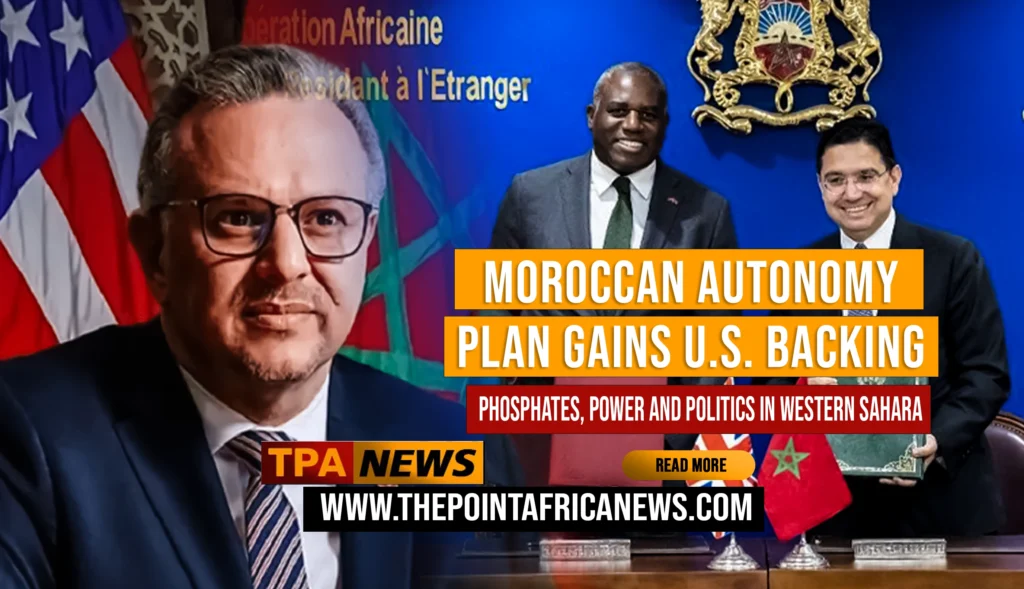
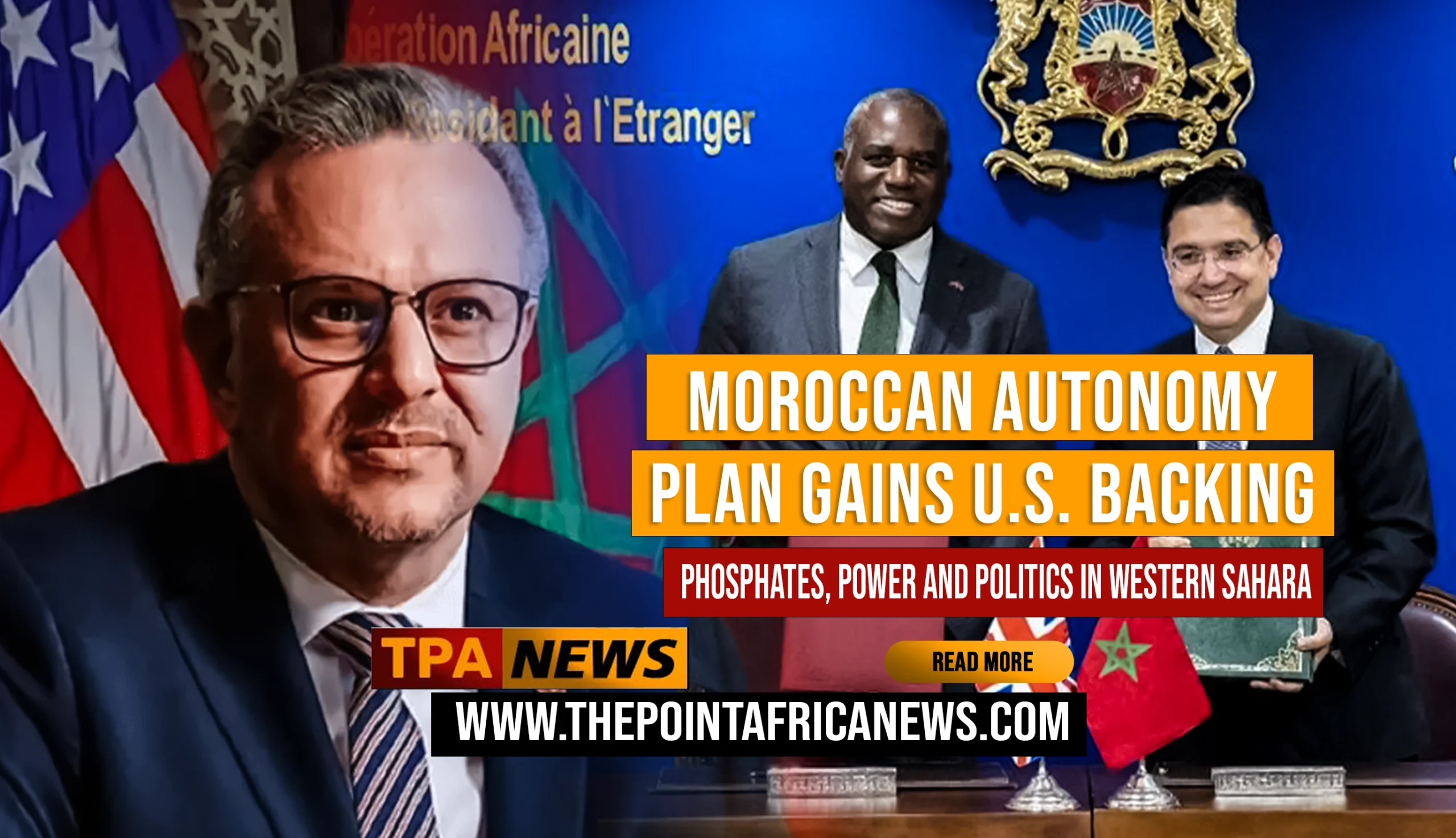
The United States has increasingly positioned itself in support of Morocco’s autonomy proposal for Western Sahara, a decades-old territorial dispute in North Africa, signaling a strategic shift in Washington’s policy toward one of Africa’s longest unresolved conflicts.
Historical reports and diplomatic notes show that successive U.S. administrations have moved from a neutral stance to actively endorsing Morocco’s autonomy framework. In 2020, under the Trump administration, the United States formally recognized Moroccan sovereignty over Western Sahara and endorsed the kingdom’s 2007 Autonomy Plan as “the only basis for a just and lasting solution” to the dispute, a marked departure from the previous U.S. position of neutrality and support for a UN-led process. In subsequent years, the Biden administration has continued to describe the Moroccan Autonomy Plan as “serious, credible and realistic,” reaffirming this stance in statements from the U.S. State Department. Recent reporting indicates that U.S. diplomatic activity around Western Sahara has focused on reaffirming support for the autonomy proposal, engaging with regional diplomatic counterparts, and working with international partners to promote the plan as a pragmatic pathway toward conflict resolution.
The U.S. position is part of a broader international trend toward backing Morocco’s autonomy framework. Several Western countries, including Belgium and the United Kingdom, have publicly endorsed Morocco’s proposal as a credible basis for resolving the conflict. Regional actors such as Kenya and Ghana have also expressed support for the autonomy initiative, illustrating growing diplomatic momentum behind Rabat’s approach. However, the autonomy plan remains contested. The Polisario Front, which seeks full independence for Western Sahara, continues to reject the autonomy framework and calls for a referendum on self-determination. Algeria, a key backer of the Polisario Front, has opposed efforts to elevate autonomy as the sole negotiating basis and continues to call for a more inclusive political process.
A significant development occurred in October 2025 when the UN Security Council adopted Resolution 2797, which renewed the mandate of the UN Mission for the Referendum in Western Sahara (MINURSO) and described the Moroccan autonomy proposal as a viable basis for negotiation. This marked a noteworthy diplomatic shift in the multilateral arena.
The Western Sahara dispute carries deep geopolitical and economic undercurrents. The territory is strategically located along Africa’s Atlantic coast, and while its nutrient resources, including phosphates, have historically been economically significant, broader political and security implications have sustained international attention over decades. Morocco’s push for international recognition of its autonomy plan is tied to long-standing sovereignty claims dating back to Spain’s withdrawal in 1975 and ongoing regional rivalries, particularly with Algeria.
Analysts describe the U.S. approach as influenced by realpolitik considerations, including securing strategic alliances with key partners in North Africa and the Sahel, aligning with European and African states that view autonomy as a pragmatic compromise, and seeking stability in a region with broader implications for security and migration. Supporters of the autonomy plan argue that it could offer a workable framework for peace, while critics contend that it sidelines aspirations for full Sahrawi self-determination.