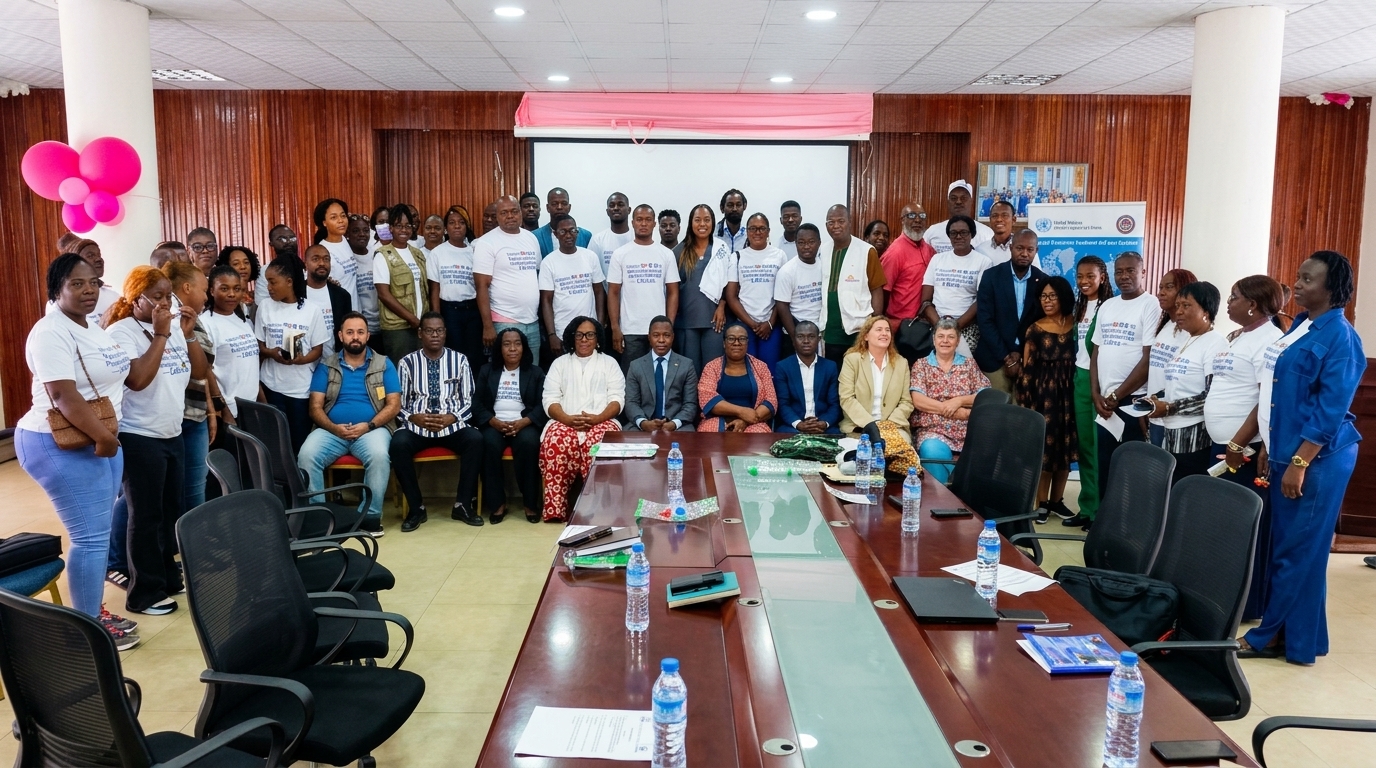
Announced by Chief Medical Officer Dr. Catherine Thomas Cooper, the survey aims to establish baseline epidemiological data across Liberia’s 15 political subdivisions to inform future prevention, treatment, and rehabilitation policies. Behind the public health rhetoric, however, lies an urgent analytical reality: Liberia is attempting to craft evidence-based drug policy in the middle of a compounding public health emergency, operating with near-zero empirical data, a severely underfunded health infrastructure, and a judicial-enforcement framework that remains heavily skewed toward punitive measures rather than rehabilitation.
The statistical void has long hindered state intervention. While public discourse focuses on the pervasive spread of "Kush"—a lethal synthetic cocktail that has devastated urban youth populations and expanded informal street settlements in Monrovia—policymakers have operated without verifiable data regarding national prevalence rates, demographic exposure, or entry points. Supported by a three-year U.S. INL funding allocation initiated in 2024, the UNODC-designed protocol will roll out two initial strands: a school-based evaluation of secondary students and a community-based assessment targeting vulnerable, out-of-school youth, beginning in Montserrado County. Yet, data collection alone exposes deep structural contradictions in the government's current response:The Rehabilitation Deficit: Generating epidemiological data will highlight the severe lack of public treatment infrastructure. The government's flagship rehabilitation center in Bentol City remains unfinished, leaving families and communities reliant on unregulated, private facilities that lack medical oversight and clinical personnel. The survey launch occurs alongside systemic friction within the Liberia Drug Enforcement Agency (LDEA) and the judiciary. Despite high-volume arrests targeting street-level users and low-level handlers, prosecution rates remain low due to judicial backlogs and weak evidence chains—even as multi-million-dollar transshipments of international narcotics continue to utilize Liberian maritime ports and transit routes.
While the executive branch’s draft FY2027 National Budget outlines expanded health allocations, public funding for community mental health and addiction recovery remains marginal compared to security overhead. Without dedicated capital allocations to act on the survey's eventual findings, the data risks becoming an academic exercise rather than a catalyst for institutional reform.
If the Ministry of Health and its international partners manage to execute the fieldwork with rigorous confidentiality safeguards, the survey will provide the 55th Legislature with its first clear empirical foundation. But until data collection is matched by structural investments in public rehabilitation infrastructure and criminal justice reform, Liberia's response to its youth addiction crisis will remain fundamentally reactive.