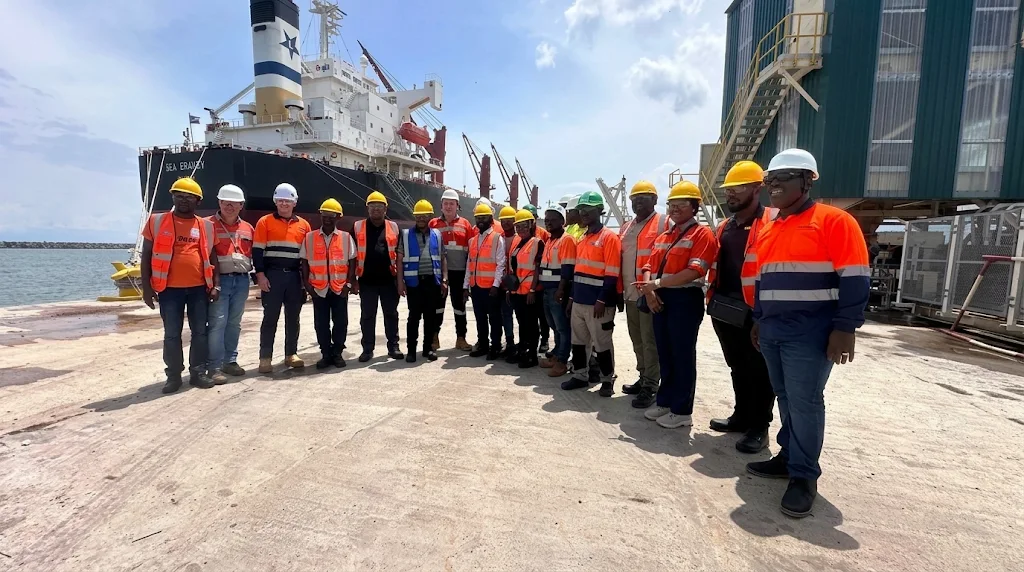
The figure was announced by ArcelorMittal Liberia Chief Executive Officer Michiel van der Merwe during the Liberia International Mining and Energy Conference and Expo on October 28. He said the investment covers mining operations, railway and port infrastructure, power generation and social infrastructure, including approximately US$800 million spent rehabilitating and expanding the railway and port corridor connecting Nimba County to Buchanan.
The company expects iron ore exports to exceed 20 million tonnes in 2027, with longer-term ambitions to reach 30 million tonnes annually. Its expansion includes a large-scale iron ore concentrator at Tokadeh, designed to process lower-grade ore into higher-value concentrate for international steel markets.
These developments represent a substantial industrial undertaking for Liberia. However, the scale of corporate investment alone does not establish the extent of its contribution to national development. The more important questions concern government revenue, local employment, infrastructure ownership, environmental protection and the economic opportunities available to Liberian businesses.
One of the most consequential aspects of the investment concerns the railway linking the company's mining operations in Nimba to Buchanan Port. The railway and port are government-owned assets, but ArcelorMittal has undertaken substantial rehabilitation and expansion work. Under the amended Mineral Development Agreement ratified in December 2025, the company's mining rights were extended to 2050, with an option for a further 25 years.
The agreement provides for multi-user access to the railway, allowing other mining companies to transport minerals through the corridor. However, additional users must finance infrastructure expansion required to accommodate their operations, while capacity being developed and reserved for ArcelorMittal remains allocated to the company.
An independently operated railway is expected to take over operations from 2030. This transition will be important in determining whether Liberia can establish a transparent and commercially accessible national mining transportation system rather than remain dependent on arrangements primarily structured around individual concession holders.
The government also secured a US$200 million payment associated with the extension of mining rights and reserved railway capacity. The agreement increased ArcelorMittal's annual contribution to the Community Development Fund from US$3 million to US$5 million for affected communities in Nimba, Bong and Grand Bassa counties.
The economic opportunities associated with mining must also be considered alongside the experiences of communities living within and around concession areas. An investigation published by French investigative outlet Disclose in October 2026 raised allegations concerning farmland destruction, compensation disputes and water contamination associated with ArcelorMittal's operations in Nimba County.
The investigation reported that 694 farmers remained awaiting compensation following a mediation process involving government-appointed representatives in May 2026. It also documented accounts from residents who said mining-related activities had affected their agricultural land and livelihoods.
These allegations deserve serious examination because agriculture remains an important source of household income and food security in affected communities.
ArcelorMittal has rejected the allegations and disputed the investigation's conclusions. In its October 20 response, the company said eligible individuals had been compensated, reporting that it had paid more than US$24 million since 2008 for crops, buildings, resettlement and land leases. It maintained that additional claims were being assessed under established procedures and denied failing to meet its environmental and compensation obligations.
The company also said it maintains environmental monitoring programmes and remains committed to addressing legitimate community concerns. The conflicting accounts highlight the importance of independent environmental assessments, transparent compensation records and effective government oversight. Neither corporate assurances nor community allegations should substitute for independently verifiable evidence.
Employment and local economic participation are equally important measures of the investment's contribution to Liberia. ArcelorMittal has previously reported approximately 8,000 direct and indirect jobs associated with its operations. However, the public interest extends beyond the number of positions created. It includes the proportion of Liberians occupying skilled technical and management positions, the development of local suppliers, wages, workplace standards and opportunities for Liberian-owned businesses to participate in the mining supply chain.
The government must also demonstrate how increased production translates into public revenue through royalties, taxes, concession payments and other contractual obligations.
The US$5 million annual Community Development Fund provides another opportunity to direct mining-related resources towards infrastructure, education, healthcare and alternative livelihoods. In September 2026, the Ministry of Mines and Energy reported that consultations were underway to establish a framework for managing and allocating the fund.
However, the effectiveness of this arrangement will ultimately depend on transparent project selection, public reporting, community participation and independent monitoring of expenditure.
ArcelorMittal's investment represents a significant industrial and commercial opportunity. The development of mining infrastructure, increased exports and potential employment growth could contribute meaningfully to Liberia's economy.
But the country's success should not be measured exclusively by the amount a foreign company says it has invested or the volume of iron ore it exports. It should also be measured by the revenue retained by the state, the opportunities created for Liberian enterprises, the condition of affected communities and the country's ability to manage strategic infrastructure in the public interest. With the mining agreement extending to 2050 and the possibility of another 25-year renewal, the decisions being made today will have implications for generations of Liberians.
The central challenge for the government is therefore to ensure that the country's mineral wealth produces benefits that extend beyond mining operations and corporate expansion. For Liberia, the nearly US$4 billion investment is not simply a corporate milestone; it is also a test of the country's ability to translate natural resource wealth into sustainable national development.
Sources: ArcelorMittal Liberia; Government of Liberia, Ministry of Mines and Energy