Live

DR Congo Considers Export Quotas as Cobalt Ban Gets Three-Month Extension

The Democratic Republic of Congo (DRC) has announced a three-month extension of its ban on cobalt exports, effective immediately. The decision, confirmed by the Authority for the Regulation and Control of Strategic Mineral Substances’ Markets (ARECOMS), aims to address the continued high levels of cobalt stock in both domestic and international markets. The initial four-month […]

Author

Staff Writer • 5 min read

Sunday, 22 June 2025 22 Jun 2025
Share𝕏f
DR Congo Considers Export Quotas as Cobalt Ban Gets Three-Month Extension

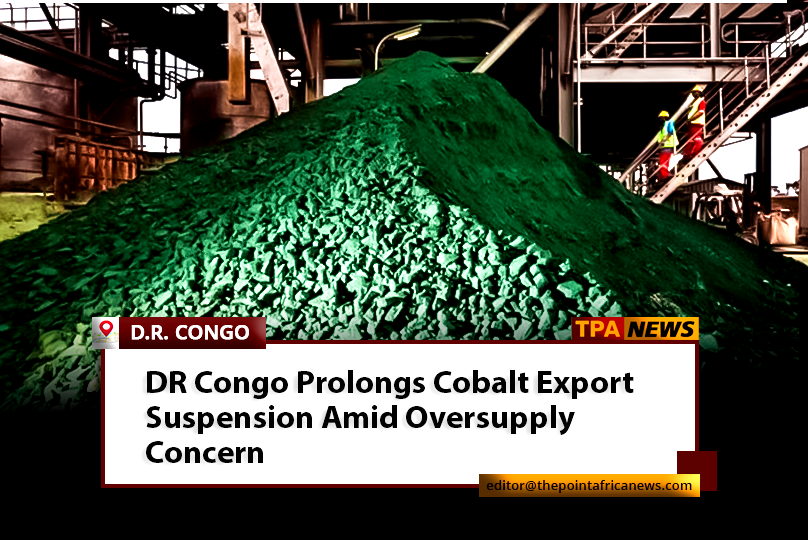
The Democratic Republic of Congo (DRC) has announced a three-month extension of its ban on cobalt exports, effective immediately. The decision, confirmed by the Authority for the Regulation and Control of Strategic Mineral Substances’ Markets (ARECOMS), aims to address the continued high levels of cobalt stock in both domestic and international markets. The initial four-month suspension, which began in February 2025, was set to expire on June 22. ARECOMS stated that the extension is necessary to stabilize the market and manage oversupply.

Cobalt, a critical component in the production of electric vehicle (EV) batteries and other electronic devices, has seen its prices fall to a nine-year low of $10 per pound earlier this year. The DRC, as the world’s largest cobalt producer, accounts for over 80% of global supply, making its policy decisions pivotal in shaping global cobalt markets.

ARECOMS has indicated that it will review the situation before the end of the three-month extension and may decide to modify, extend, or lift the export ban based on market developments. Additionally, the DRC government is considering implementing an export quota system to better manage cobalt shipments and stabilize prices. This proposal has garnered support from major industry players such as Glencore, the world’s second-largest cobalt producer, but faces opposition from CMOC Group, the top producer, which has lobbied for the ban to be lifted.

Advertisement

Reach 2M+ pan-African readers

Advertise with us →

The extended export ban is expected to have significant implications for the global EV industry, potentially leading to increased cobalt prices and prompting manufacturers to explore alternative materials or adjust their supply chains. The DRC’s strategic decisions regarding cobalt exports will continue to influence the dynamics of the global battery materials market.

Author

Written by

Staff writer at The Point Africa News.

Related Stories

78-Hour Legislative Ultimatum: House Intervenes as Monrovia Port Gridlock Strangles Liberian Supply Chains
Business

78-Hour Legislative Ultimatum: House Intervenes as Monrovia Port Gridlock Strangles Liberian Supply Chains

MONROVIA, Liberia — The House of Representatives has stepped directly into Liberia’s maritime logistics crisis, constituting a Joint Committee on Good Governance and Maritime Affairs and imposing a strict 78-hour deadline to dismantle severe cargo congestion at the Freeport of Monrovia.

David S. Johnson•21h ago

Ghana Champions Inclusion of Caribbean Nations in AfCFTA Architecture
Business

Ghana Champions Inclusion of Caribbean Nations in AfCFTA Architecture

ACCRA, Ghana — In a move aimed at translating historical transcontinental ties into formal commercial structures, Ghana has formally proposed extending the trade and investment framework of the African Continental Free Trade Area (AfCFTA) to include the Caribbean Community (CARICOM).

David S. Johnson•23h ago

Morocco Halts African Tomato Shipments as Domestic Inflation Mounts
Business

Morocco Halts African Tomato Shipments as Domestic Inflation Mounts

RABAT, Morocco — The Moroccan government has temporarily suspended export permits for fresh tomatoes bound for sub-Saharan African markets, prioritizing domestic supply stabilization as retail prices approach record highs of 12 to 15 dirhams ($1.20–$1.50) per kilogram in local markets.

David S. Johnson•23h ago

OECD Warns Africa’s Shallow Corporate Debt Markets Constrain Private Sector Expansion
Business

OECD Warns Africa’s Shallow Corporate Debt Markets Constrain Private Sector Expansion

PARIS, France — Africa’s corporate debt markets remain structurally undersized and ill-equipped to supply the long-term capital required for continental economic growth, according to the OECD’s Africa Capital Markets Report 2026 released on Friday. Outstanding market-based corporate debt across all 54 African economies reached just $211 billion at the end of 2025—representing a mere 0.3 percent of global corporate debt despite the continent accounting for nearly 2.7 percent of global GDP.

David S. Johnson•23h ago

Enjoying our journalism?

Get the biggest African stories in your inbox every morning.

By subscribing you agree to our privacy policy. Unsubscribe anytime.