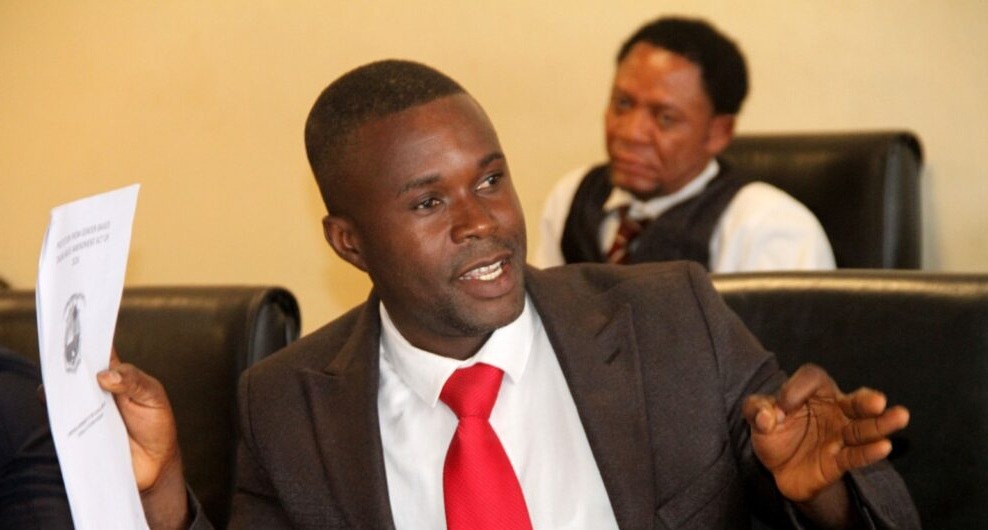
Speaking at a UNDP-supported National Constitutional Reform Symposium in Ganta, Nimba County, PUL representative Fabine Kwiah cautioned on behalf of the union that any updated supreme law must reflect the lived realities of ordinary Liberians rather than serving as a tool for partisan convenience.
"Our current constitutional framework—engineered under the shadow of military rule—is an outdated relic," Kwiah stated. "Four decades have passed since its formulation, during which Liberia’s social, political, economic, and environmental realities have changed drastically." Representing PUL leadership alongside absent President Julius Kanubah, the union stressed that all constitutional provisions guaranteeing democratic rights—including civil and political liberties, freedom of speech and expression, free press, and freedom of association—must be fully safeguarded. Furthermore, accountability for the abuse of these fundamental rights must be explicitly detailed rather than left to conflicting interpretations. Addressing the economic realities of the country, Kwiah emphasized that citizens have long languished in poverty and inequality due to a historical failure to constitutionally codify economic rights over natural resources. The union argued that Liberia urgently needs an inclusive, enabling constitution that benefits every citizen rather than serving political elites or extractive capitalist ventures.
Pasting together these core demands, the PUL pinpointed several critical vulnerabilities in the 1986 Constitution that continue to stall national progress. Central to their concerns is the over-centralization of executive authority, an imperial presidency that stifles genuine administrative decentralization and leaves local governance dependent on presidential patronage. Ambiguities surrounding judicial appointments further weaken the bench's independence, opening doors for ruling administrations to pressure the judiciary and silence political dissent.
Additionally, vague language in Article 61 regarding executive immunity fosters a culture of impunity, shielding former officials from high-level corruption prosecutions. The union highlighted the lack of robust, independent mechanisms to disqualify or hold accountable public officials facing severe corruption allegations. Compounding these systemic flaws are broad national security caveats and legislative loopholes that continue to be weaponized against press freedom, threatening the statutory protections guaranteed under the landmark Kamara Abdullah Kamara Press Freedom Act.
Organized by the Governance Commission in collaboration with the Law Reform Commission, the three-day symposium aims to set the blueprint for national legislative amendments. However, media leaders insist that technical drafting must be paired with unyielding public oversight to ensure key democratic protections are not diluted during the reform process.