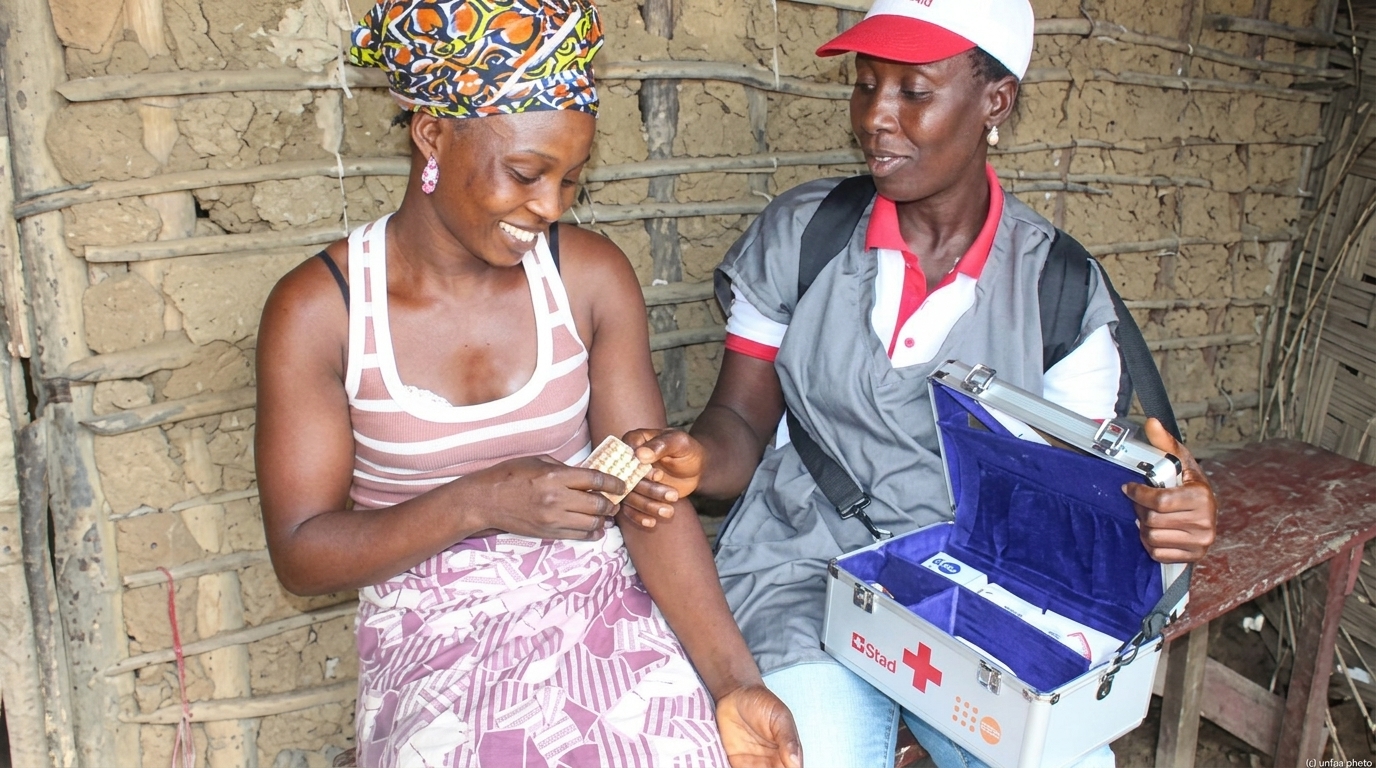
When global health assistance shrinks or becomes bound by restrictive foreign policy mandates such as the U.S. Global Gag Rule, the resulting financial shock creates a multi-million-dollar gap in the national health budget, putting vulnerable populations directly in the crosshairs.
The empirical data reveals an adolescent health crisis that leaves no structural buffer for international policy interruptions. Figures from the Liberia Institute of Statistics and Geo-Information Services (LISGIS) and international health assessments indicate that Liberia carries a maternal mortality ratio of 854 deaths per 100,000 live births, with young women aged 15 to 24 accounting for more than a third of all maternal deaths nationwide.
Nearly 30 percent of adolescent girls aged 15 to 19 have already begun childbearing, a figure that surges past 50 percent in rural strongholds like River Cess County. When international procurement streams stall, rural clinics suffer immediate stockouts of long-acting reversible contraceptives, oral contraceptives, and emergency supplies. In a country where an estimated 38,000 pregnancies end in unsafe abortions annually, stripping away basic family planning access directly drives up high-risk, unintended pregnancies and severe maternal complications.
The structural impact reaches well beyond empty clinic shelves to the frontline healthcare workforce serving as the primary line of defense for isolated communities. Community health assistant networks and non-governmental organizations—such as the Planned Parenthood Association of Liberia (PPAL)—face sudden funding deficits, forcing them to suspend rural outreach programs and lay off clinical staff in isolated districts. When health workers can no longer travel to remote villages or provide youth-friendly clinical counseling, adolescent health metrics decline sharply. Strict compliance requirements force local civil society groups to choose between restricting comprehensive reproductive health education or forfeiting external aid entirely, crippling community outreach networks. Tying adolescent health outcomes to volatile international policy cycles creates an unsustainable risk for Liberia’s demographic and economic future. While short-term emergency grants offer temporary relief, long-term resilience requires a clear trajectory toward national health sovereignty. While President Boakai’s draft FY2027 budget proposes US$135.8 million for the health sector, securing the health and dignity of young Liberians requires dedicated domestic budget allocations specifically earmarked for reproductive health procurement, resilient national supply chain systems, and targeted investments in youth-centered clinical infrastructure that remain uninterrupted regardless of political shifts abroad.