Live

Tehran Moves Toward Closing Key Oil Route Following U.S. Attack on Nuclear Sites

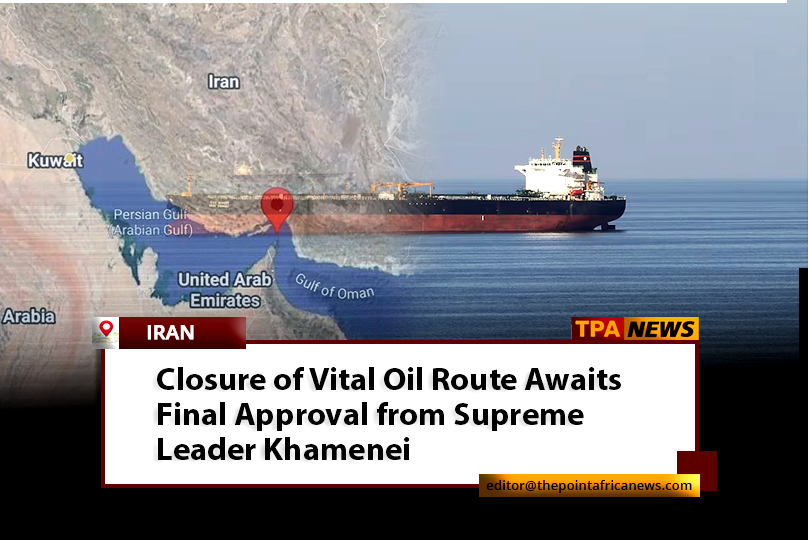
Iran’s parliament has approved a proposal to close the Strait of Hormuz, a critical maritime route through which about 20 percent of the world’s oil flows, in direct response to recent U.S. airstrikes on three of its nuclear facilities. However, the measure is not yet in effect, pending final authorization from Supreme Leader Ayatollah Ali […]

Author

Staff Writer • 5 min read

Sunday, 22 June 2025 22 Jun 2025
Share𝕏f
Tehran Moves Toward Closing Key Oil Route Following U.S. Attack on Nuclear Sites

Iran’s parliament has approved a proposal to close the Strait of Hormuz, a critical maritime route through which about 20 percent of the world’s oil flows, in direct response to recent U.S. airstrikes on three of its nuclear facilities. However, the measure is not yet in effect, pending final authorization from Supreme Leader Ayatollah Ali Khamenei.

The decision, passed in Tehran over the weekend, follows rising tensions after American B-2 bombers reportedly struck Iran’s nuclear sites in Fordow, Natanz, and Isfahan. The parliamentary vote marks a significant escalation, but its implementation will ultimately rest with Iran’s Supreme National Security Council and the Supreme Leader himself.

Lawmaker Esmaeil Kowsari, speaking on state television, confirmed the vote and emphasized that “the final decision lies with the leadership.” Iran’s leadership has not yet issued an official decree enforcing the closure.

The Strait of Hormuz, only about 40 kilometers wide at its narrowest point, serves as the primary passage for oil and natural gas exports from the Gulf. According to the U.S. Energy Information Administration, it carried more than 20 million barrels of crude oil per day in 2024.

Global markets have already responded cautiously, with analysts warning that even limited disruption could send oil prices above $90 per barrel. International powers including China have urged restraint, and U.S. Secretary of State Marco Rubio warned that any closure would trigger a strong response from Washington and could severely damage Iran’s own economy.

Advertisement

Reach 2M+ pan-African readers

Advertise with us →

Despite the bold rhetoric, analysts say the vote remains largely symbolic unless officially enacted. A full-scale closure of the Strait could spark a regional crisis, disrupting global supply chains and increasing tensions with Western and Gulf nations.

By: TPA News Desk | editor@thepointafricanews.com

Author

Written by

Staff writer at The Point Africa News.

Related Stories

78-Hour Legislative Ultimatum: House Intervenes as Monrovia Port Gridlock Strangles Liberian Supply Chains
Business

78-Hour Legislative Ultimatum: House Intervenes as Monrovia Port Gridlock Strangles Liberian Supply Chains

MONROVIA, Liberia — The House of Representatives has stepped directly into Liberia’s maritime logistics crisis, constituting a Joint Committee on Good Governance and Maritime Affairs and imposing a strict 78-hour deadline to dismantle severe cargo congestion at the Freeport of Monrovia.

David S. Johnson•21h ago

Ghana Champions Inclusion of Caribbean Nations in AfCFTA Architecture
Business

Ghana Champions Inclusion of Caribbean Nations in AfCFTA Architecture

ACCRA, Ghana — In a move aimed at translating historical transcontinental ties into formal commercial structures, Ghana has formally proposed extending the trade and investment framework of the African Continental Free Trade Area (AfCFTA) to include the Caribbean Community (CARICOM).

David S. Johnson•23h ago

Morocco Halts African Tomato Shipments as Domestic Inflation Mounts
Business

Morocco Halts African Tomato Shipments as Domestic Inflation Mounts

RABAT, Morocco — The Moroccan government has temporarily suspended export permits for fresh tomatoes bound for sub-Saharan African markets, prioritizing domestic supply stabilization as retail prices approach record highs of 12 to 15 dirhams ($1.20–$1.50) per kilogram in local markets.

David S. Johnson•23h ago

OECD Warns Africa’s Shallow Corporate Debt Markets Constrain Private Sector Expansion
Business

OECD Warns Africa’s Shallow Corporate Debt Markets Constrain Private Sector Expansion

PARIS, France — Africa’s corporate debt markets remain structurally undersized and ill-equipped to supply the long-term capital required for continental economic growth, according to the OECD’s Africa Capital Markets Report 2026 released on Friday. Outstanding market-based corporate debt across all 54 African economies reached just $211 billion at the end of 2025—representing a mere 0.3 percent of global corporate debt despite the continent accounting for nearly 2.7 percent of global GDP.

David S. Johnson•23h ago

Enjoying our journalism?

Get the biggest African stories in your inbox every morning.

By subscribing you agree to our privacy policy. Unsubscribe anytime.