Live

Iran’s Nuclear Accord: From Landmark Agreement to Lingering Crisis

As we approach the 10-year anniversary of its signing, the Joint Comprehensive Plan of Action (JCPOA) remains a pivotal, yet controversial, chapter in international diplomacy. Almost a decade ago, in July 2015, the United States and other world powers reached this landmark nuclear agreement with Iran. Hailed by some as a triumph of diplomacy and […]

Author

Staff Writer • 5 min read

Sunday, 22 June 2025 22 Jun 2025
Share𝕏f
Iran’s Nuclear Accord: From Landmark Agreement to Lingering Crisis

As we approach the 10-year anniversary of its signing, the Joint Comprehensive Plan of Action (JCPOA) remains a pivotal, yet controversial, chapter in international diplomacy. Almost a decade ago, in July 2015, the United States and other world powers reached this landmark nuclear agreement with Iran. Hailed by some as a triumph of diplomacy and criticized by others as fatally flawed, the accord sought to prevent Iran from developing nuclear weapons in exchange for economic relief. Today, with Iran’s nuclear program reportedly advancing and international tensions soaring, many are left asking: What exactly was this agreement, why did it fall apart, and what does its legacy mean for global security?

The JCPOA was meticulously negotiated, involving Iran, the P5+1 (comprising the five permanent members of the UN Security Council – China, France, Russia, the United Kingdom, and the United States – plus Germany), and the European Union (EU). Its primary goal was to extend Iran’s “breakout time”—the theoretical period needed to produce enough fissile material for one nuclear weapon—to at least one year. To achieve this, Iran agreed to significant restrictions and verification measures. These included committing to reducing its stockpile of enriched uranium by 98% and limiting enrichment levels to 3.67%, which is suitable for power generation but far below weapons-grade (~90%). Iran also agreed to reduce its number of operating centrifuges by two-thirds and to only use older, less efficient models. Additionally, the Arak heavy water reactor, capable of producing weapons-grade plutonium, was to be redesigned so it could not produce plutonium for military purposes. To ensure compliance, the agreement provided the International Atomic Energy Agency (IAEA) unprecedented access to Iran’s nuclear facilities, including “24/7” continuous monitoring, and provided for robust verification mechanisms. In return for these concessions, the UN, U.S., and EU lifted a wide array of nuclear-related sanctions that had severely impacted Iran’s economy, particularly its vital oil exports and access to the global financial system.

Despite initial successes, with the IAEA consistently verifying Iran’s compliance in the years immediately following the agreement, the JCPOA began to unravel primarily due to a change in U.S. policy. In May 2018, President Donald Trump announced the United States’ unilateral withdrawal from the JCPOA. His administration argued that the deal was fundamentally flawed, contending it did not adequately address Iran’s ballistic missile program, its support for regional proxy groups, or the “sunset clauses”—provisions that would gradually lift some nuclear restrictions after a set period. Following the withdrawal, the U.S. immediately re-imposed and intensified a range of crippling sanctions on Iran, aiming for a policy of “maximum pressure.” These sanctions targeted key sectors of the Iranian economy, including oil exports, banking, and shipping. In response to the U.S. withdrawal and the inability of the remaining parties (E3/EU, China, Russia) to fully compensate for the economic impact of U.S. sanctions, Iran began to gradually scale back its commitments under the JCPOA starting in May 2019. This included increasing uranium enrichment levels, accumulating larger stockpiles, and reinstalling advanced centrifuges. Iran maintained that these actions were reversible if the U.S. returned to the deal and sanctions were lifted. Ultimately, the withdrawal led to heightened tensions in the Persian Gulf region, increased military posturing, and a significant deterioration of diplomatic relations between Iran and the U.S.

Advertisement

Reach 2M+ pan-African readers

Advertise with us →

Today, both the United States and Israel remain steadfast in their determination to prevent Iran from obtaining a nuclear weapon, and they view Iran’s nuclear program with deep suspicion. While the Biden administration initially expressed a willingness to return to the JCPOA through negotiations, efforts to revive the agreement have largely stalled. Washington continues to pursue a dual-track approach of diplomatic pressure and sanctions, while reiterating that “all options are on the table” to prevent a nuclear-armed Iran. Concerns extend beyond nuclear weapons to Iran’s regional destabilizing activities and its missile capabilities. For its part, Israel has consistently viewed Iran’s nuclear program as an existential threat. It opposed the JCPOA from its inception, arguing that it didn’t go far enough to dismantle Iran’s nuclear infrastructure and failed to address Iran’s broader regional behavior. Israel maintains a policy of preventing Iran from acquiring nuclear weapons by any means necessary, including military action, and has reportedly carried out covert operations against Iran’s nuclear and military sites.

As we stand nearly a decade on from its inception, the trajectory of the JCPOA serves as a stark reminder of the complexities of international diplomacy and the enduring challenge of nuclear proliferation. While the initial agreement offered a pathway to de-escalation, its subsequent collapse has ushered in a period of heightened uncertainty. With both the U.S. and Israel remaining resolute in their aim to prevent a nuclear-armed Iran, the world watches to see if a new diplomatic solution can be forged, or if the current impasse will lead to further instability in an already volatile region.

Author

Written by

Staff writer at The Point Africa News.

Related Stories

Zimbabwe and Russia Advance Strategic Healthcare and Localized Production Partnership
Politics

Zimbabwe and Russia Advance Strategic Healthcare and Localized Production Partnership

MOSCOW, Russia — Zimbabwean Vice President Kembo Mohadi, alongside Deputy Minister of Health and Child Care Sleiman Kwidini, has arrived in Moscow to transition bilateral health commitments with the Russian Federation from high-level diplomatic frameworks into concrete operational and manufacturing projects.

David S. Johnson•21h ago

LNP Issues Public Safety Announcement Banning Street Vending Along Tubman Boulevard Construction Corridor
Politics

LNP Issues Public Safety Announcement Banning Street Vending Along Tubman Boulevard Construction Corridor

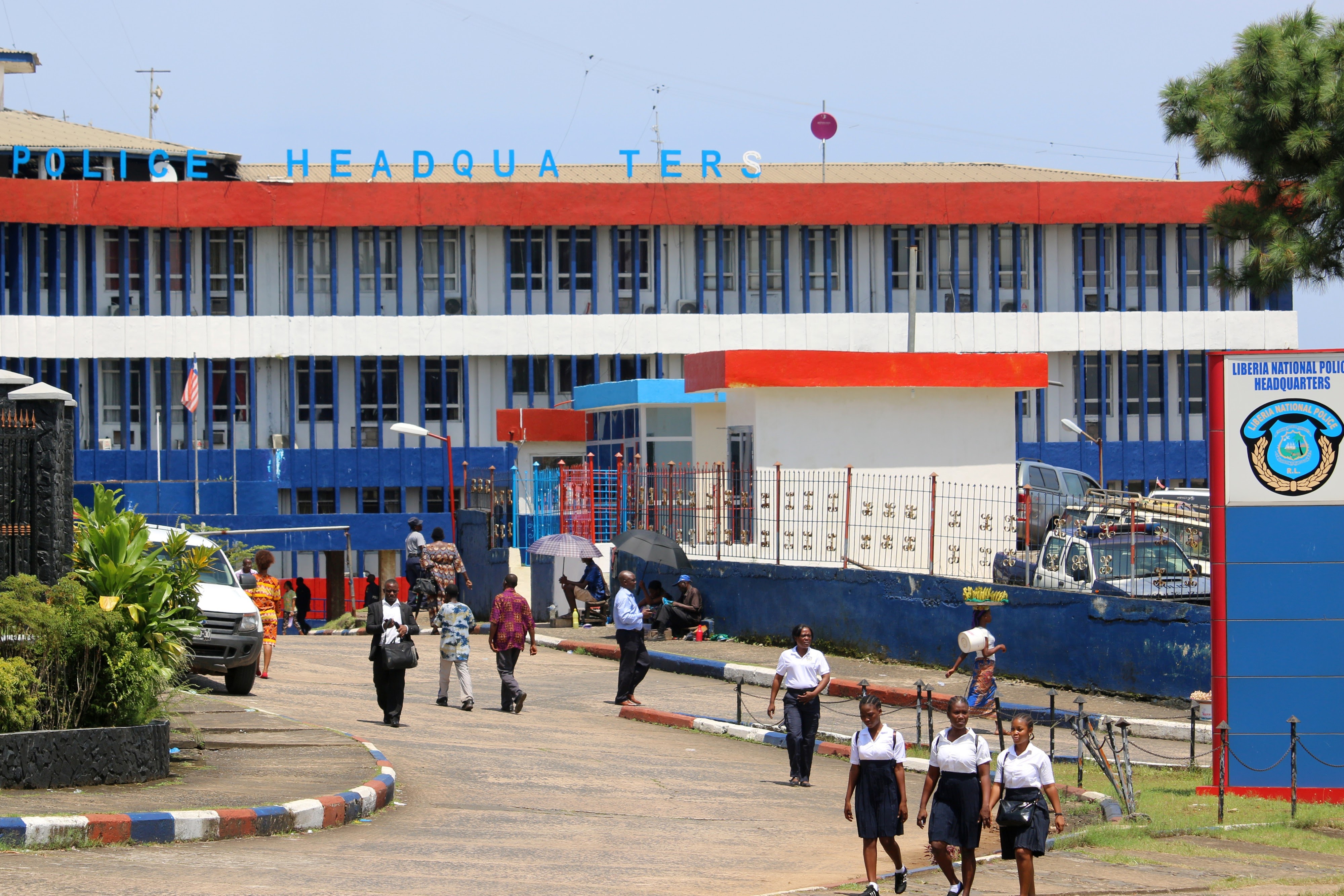
MONROVIA — The Liberia National Police (LNP) has issued a Public Safety Announcement informing all marketers, street vendors, petty traders, and members of the public that the sale of goods and all other commercial activities are strictly prohibited within the ongoing overhead bridge construction corridor along Tubman Boulevard.

David S. Johnson•22h ago

Power to the Periphery: Self-Financed Grid Expansion Tests LEC Capacity and Local Governance in Western Liberia
Politics

Power to the Periphery: Self-Financed Grid Expansion Tests LEC Capacity and Local Governance in Western Liberia

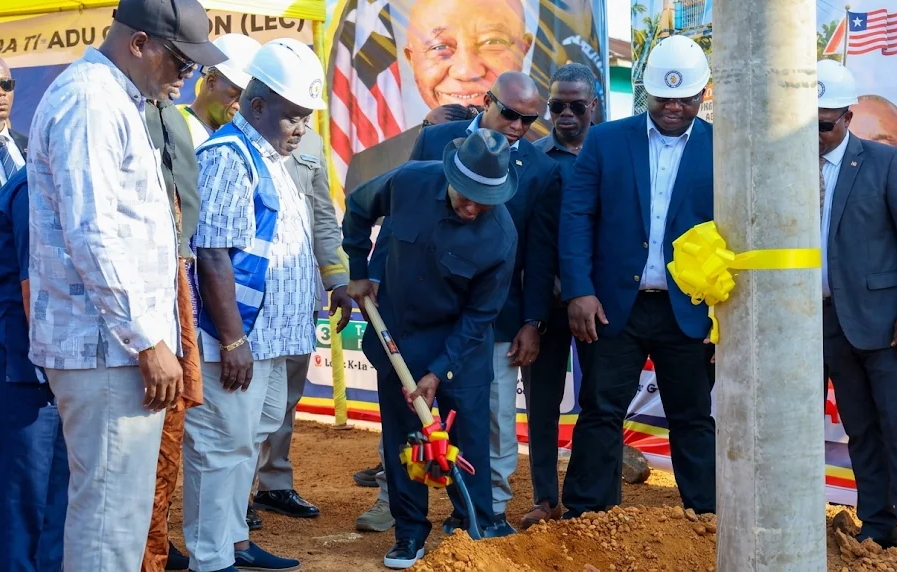
CLAY, BOMI COUNTY — President Joseph Nyuma Boakai officially broke ground on Friday, November 6, 2026, for a major regional electrification initiative targeting Bomi, Gbarpolu, and Grand Cape Mount counties.

David S. Johnson•22h ago

Scout Association’s Anti-Plastic Drive Targets Buchanan
Politics

Scout Association’s Anti-Plastic Drive Targets Buchanan

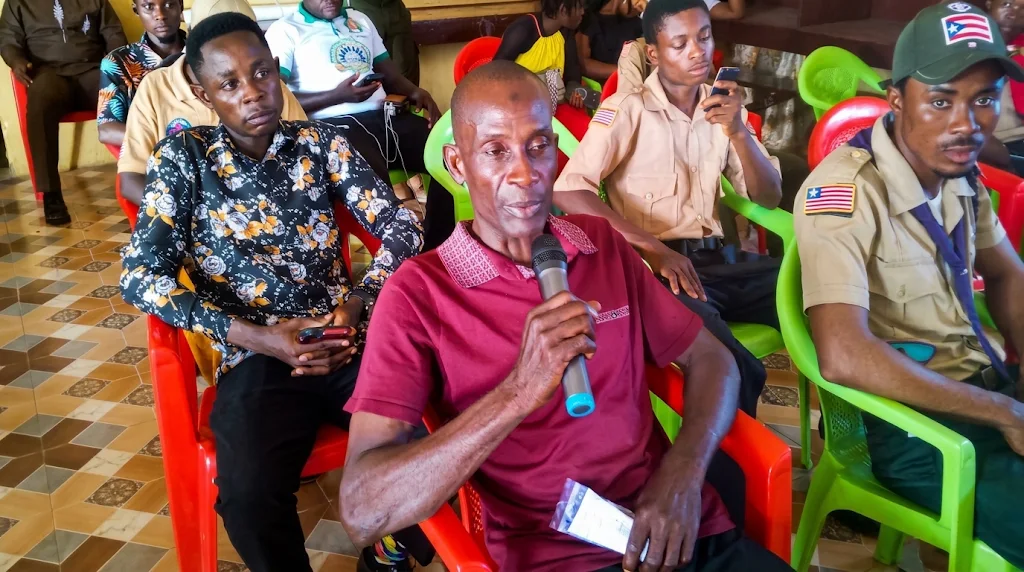
BUCHANAN, Liberia — The Liberia Scout Association has extended its Environmental Stewardship Project to Buchanan, Grand Bassa County, convening local residents at the Bassa Youth Caucus to advocate for reductions in single-use plastics under the banner "Reduce Single-Use Plastics for a Longer, Healthier and Cleaner Environment."

David S. Johnson•23h ago

Enjoying our journalism?

Get the biggest African stories in your inbox every morning.

By subscribing you agree to our privacy policy. Unsubscribe anytime.