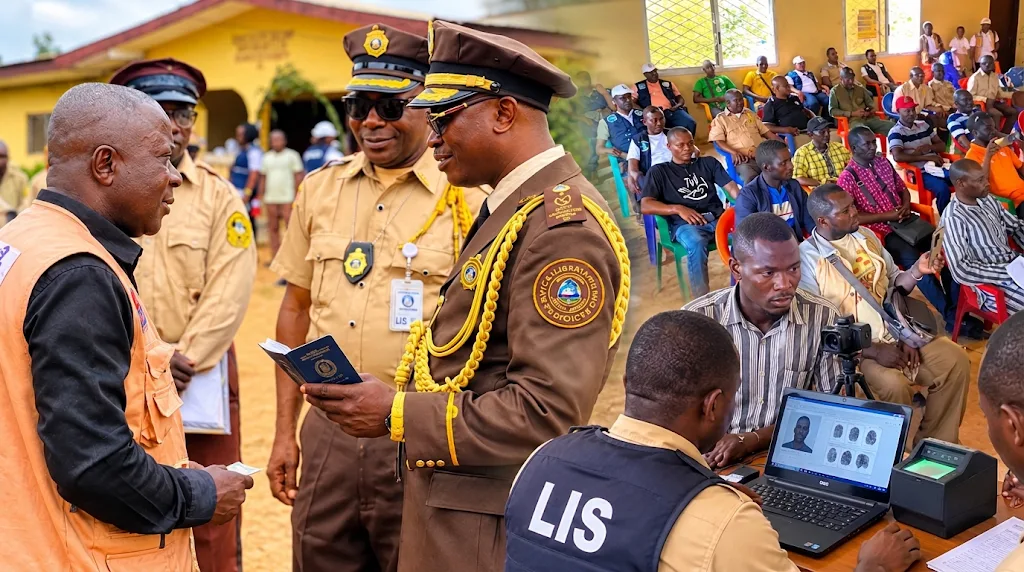
The Liberia Immigration Service (LIS) announced that the exercise began in Zleh Town, Grand Gedeh County, through a joint team involving the LIS, Liberia Refugee Repatriation and Resettlement Commission (LRRRC), Ministry of Justice and National Identification Registry (NIR).
The operation is expected to extend to communities across Grand Gedeh, River Gee, Maryland and Nimba counties.
The registration involves collecting personal information, fingerprints and photographs for inclusion in the national database. Authorities say the exercise is intended to identify and document migrants who have lived in Liberia without recognized identification documents.
The initiative follows a presidential directive assigning relevant government institutions to coordinate efforts to address undocumented migrant populations, particularly Burkinabè nationals residing in southeastern Liberia.
Earlier announcements by the LRRRC indicated that the registration period would run from November 5 to December 31, 2026, with designated profiling centers established across the four counties. The government has previously estimated that approximately 140,000 migrants, predominantly Burkinabè, could be covered by the exercise. That figure remains an estimate rather than a confirmed registration total.
According to the LIS, the exercise is not intended to intimidate, harass or discriminate against migrants. Community leaders have been encouraged to inform affected residents and urge them to present themselves for registration.
The Service has also assured participants that information collected will remain confidential and be used for official purposes in accordance with applicable laws and procedures.
However, the exercise raises important questions about the protection of personal information, access to biometric records and the administrative treatment of individuals whose identities or immigration status cannot immediately be established.
While accurate documentation can help authorities manage migration and improve public administration, registration alone does not establish that an individual has committed an immigration offence. The process must therefore distinguish between people lacking identification documents and those who have violated immigration laws.
The government will also need to demonstrate that the exercise respects applicable legal protections and regional obligations concerning the movement and treatment of migrants.