Adopted on July 2, 2006, in Banjul, The Gambia, and entering into force on August 8, 2009, the Charter established a continental framework for advancing the rights and development of young people aged 15 to 35. It calls on governments to move beyond treating young people as beneficiaries of development and recognise them as active participants in shaping their societies.
In 2026, as the African Union marks the Charter’s twentieth anniversary, an important question deserves attention: how much has changed in the lives of ordinary young Africans?
For Liberia, the question is particularly significant. The United Nations Population Fund (UNFPA) estimates that 75 percent of the country’s population is under 35. That means youth development is not a secondary social-policy concern. It is central to Liberia’s economic future, democratic stability and national development.
Liberia has taken steps to establish a framework for addressing youth development. In October 2025, the Government launched its National Youth Policy and Action Plan 2025–2029, developed by the Ministry of Youth and Sports in collaboration with national youth organisations, with support from UNFPA and UN Women.
The plan sets out priorities covering employment and entrepreneurship, agriculture, education and skills training, healthcare, mental health, information technology, peacebuilding, creative industries, sports, gender inclusion and environmental protection. Its stated vision is to promote transformational change through youth-led innovation and inclusive participation.
The plan was launched with an estimated five-year financing requirement of US$81 million, according to UNFPA. It is also aligned with the African Youth Charter, the Sustainable Development Goals and Liberia’s National Development Plan. This is an important development. Liberia is not starting from an absence of policy commitments. It has identified many of the challenges facing young people and outlined areas for intervention.
But a policy document, however comprehensive, does not automatically create jobs, improve schools, expand vocational training or give young people influence over government decisions. The real test is whether the commitments receive predictable funding, whether ministries and implementing institutions coordinate effectively, and whether progress is measured and made public.
The employment figures illustrate the scale of the challenge. Liberia’s 2024 Labour Force Survey, cited in an IMF country report, found that 44.2 percent of people aged 15 to 24 were not in education, employment or training. The same data showed that informal employment accounted for 87.6 percent of total employment.
These figures describe different labour-market conditions, but together they point to a difficult reality: many young people are struggling to access education and work, while much of the employment available remains informal.
A youth employment strategy must therefore go beyond announcing training programmes or distributing small business grants. It must address the conditions that allow businesses to grow, create productive jobs, access finance and offer young people opportunities to build sustainable livelihoods. The African Youth Charter also recognises the importance of young people's participation in decision-making.
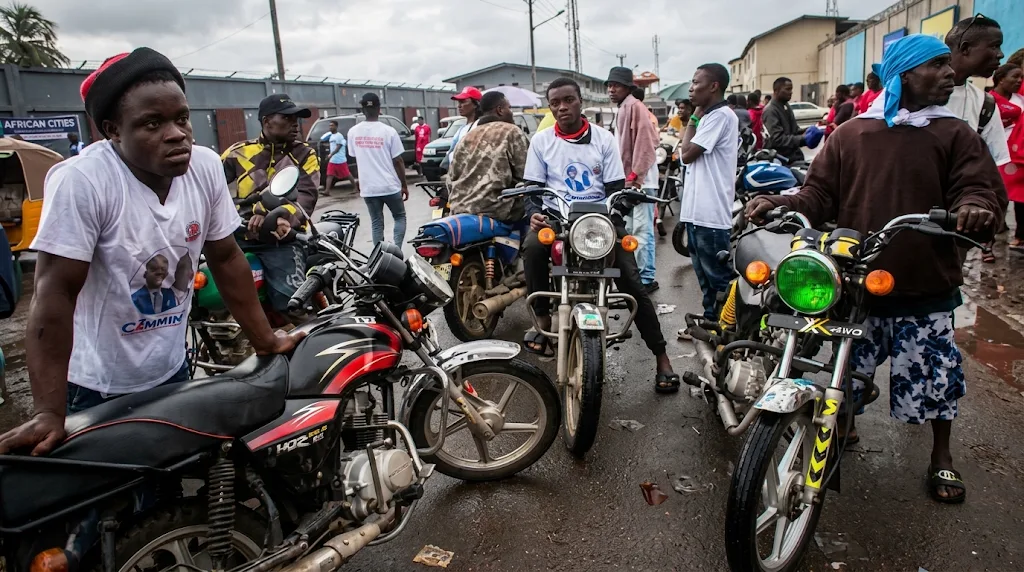
Across Liberia and the wider region, young people are frequently visible during election campaigns, political rallies and public consultations. Their mobilisation can be decisive in political contests. Yet visibility during political events does not necessarily translate into influence over the policies and decisions that shape their lives.
Meaningful participation requires more than inviting young people to attend meetings. It means giving them opportunities to contribute to policy design, participate in institutions, question public officials and influence decisions on budgets and national priorities.
A 2026 peer-reviewed study examining the implementation of the ECOWAS Youth Policy in Ghana identified weak coordination among implementing institutions and limited involvement of young people in the policy process. Although the findings concern Ghana, they illustrate a wider implementation problem: governments may establish youth frameworks without creating sufficient space for young people to shape how those frameworks are carried out.
For Liberia, the new National Youth Policy will need mechanisms that allow youth organisations, students, rural communities, young women and persons with disabilities to participate beyond the launch of the document. Liberia's experience reflects a broader challenge across West Africa. ECOWAS adopted its own Youth Policy in 2008, recognising the need to expand opportunities and strengthen young people's participation in regional development.
However, the existence of regional and national policies has not removed persistent barriers to productive employment, quality education and political inclusion.
A 2025 study examining youth disillusionment across six West African countries found a gap between young people's expectations and their perceptions of ECOWAS. The research reported that some young people viewed the regional institution as distant from their economic and political concerns, despite the existence of youth programmes and policies.
The implications extend beyond employment. When young people see few opportunities to influence decisions or improve their economic circumstances, confidence in public institutions can weaken. That frustration can deepen political disengagement and make societies more vulnerable to instability. This does not mean young people should be viewed primarily through the lens of insecurity. Rather, it reinforces the need to treat them as partners in governance, peacebuilding and economic development.
There is another question that deserves more attention: how many young people actually know about the African Youth Charter? The Charter has been discussed within African Union institutions and youth-development programmes for two decades. Yet there is no reliable, representative evidence establishing what proportion of young Liberians or West Africans are familiar with its provisions.
That information gap matters. Rights and commitments cannot easily become tools for public accountability if the people they are intended to benefit do not know what governments have promised.
Governments, schools, universities, youth organisations and civil society groups have a role in making the Charter more accessible. Young people should be able to understand what it guarantees, how national policies relate to it and where they can seek information about implementation.
The African Union's twentieth-anniversary campaign offers an opportunity to move beyond ceremonial recognition and make the Charter more visible in communities, classrooms and public discussions. The Charter's twentieth anniversary should not be measured only by conferences, speeches and declarations of commitment. It should be an opportunity to examine what governments have actually delivered.
For Liberia, that means asking practical questions. How much of the US$81 million requirement for the National Youth Policy has been secured? Which programmes have received funding? How many young people have obtained meaningful employment or completed relevant skills training? Are young people participating in decisions at national and local levels? Are results being independently monitored and publicly reported?
These are the questions that can turn policy commitments into measurable public accountability.
The African Youth Charter provided a framework in 2006. Liberia's National Youth Policy and Action Plan provides a more recent national roadmap. But neither document can deliver development without political commitment, resources, institutional coordination and the active involvement of young people.
Twenty years after African leaders made their promise, the central issue is no longer simply what governments have written in their policies. It is whether young Africans can see the difference in their daily lives.
For Liberia, the next four years of the National Youth Policy will provide an important test. The country has articulated a vision. Its credibility will depend on whether that vision becomes an experience young people can actually feel—in the classroom, in the workplace, in their communities and in the decisions that govern their future.
Beyond the headlines, this is the Bigger Picture.