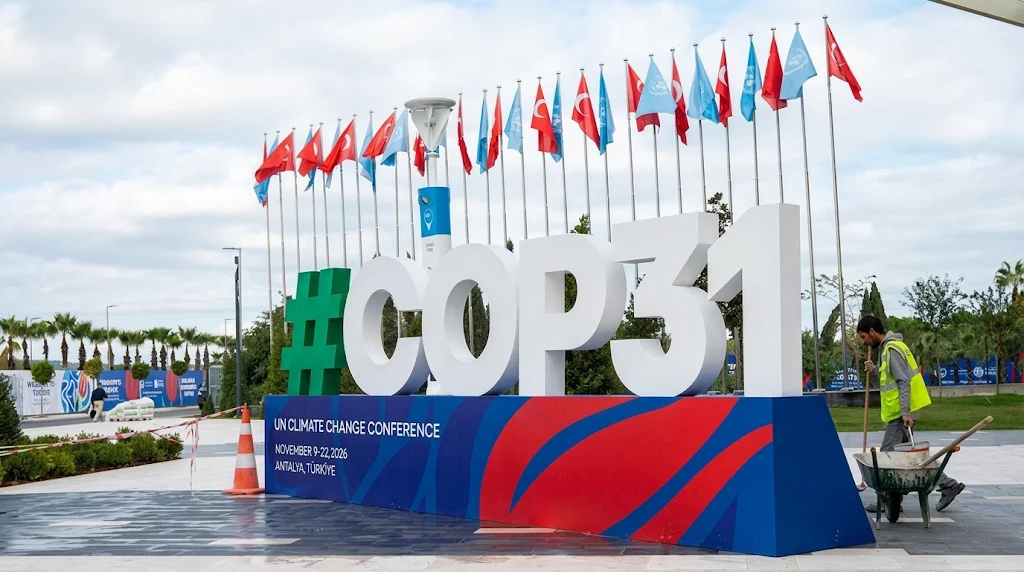
But for Africa, where hundreds of millions of people still lack access to electricity, the initiative raises a more fundamental question: can the world accelerate electrification without first addressing the deep inequalities in access to energy and the cost of the transition?
Türkiye's COP31 presidency wants governments to place the proposed "35 by 35" target at the centre of the conference's final agreement. The initiative seeks to increase electricity's share of global final energy consumption from just over 20 percent today to 35 percent by 2035, largely by replacing fossil-fuel-powered vehicles, heating systems, industrial equipment and cooking technologies with electric alternatives.
Although electrification can reduce emissions and improve energy efficiency, the proposal has attracted criticism because it does not clearly require the additional electricity to come from low-carbon sources. Without such a requirement, countries could increase electricity consumption while continuing to generate much of their power from coal, oil and gas. In that scenario, emissions may simply shift from vehicles, factories and homes to power stations rather than disappear.
The contradiction is particularly significant given the energy profiles of the countries leading the initiative. Coal accounts for about one-third of Türkiye's electricity generation, while Australia, which is leading the negotiations alongside the host country, generates more than 40 percent of its electricity from coal, according to figures reported during the summit.
For Africa, however, the debate goes beyond the environmental credibility of the target. It concerns whether global climate ambitions adequately recognise the continent's development challenges.
According to the International Energy Agency's 2025 report on financing electricity access in Africa, approximately 600 million people in sub-Saharan Africa lacked access to electricity in 2024, representing about 47 percent of the region's population. The agency estimates that achieving universal electricity access will require investment of approximately $15 billion annually, alongside expansion of generation capacity, transmission networks and decentralised energy systems.
These figures expose a major gap between the global ambition to electrify transport, buildings and industry and the immediate reality facing many African communities. In countries where households depend on firewood and charcoal for cooking, businesses operate generators to compensate for unreliable supply, and rural communities remain beyond the reach of national grids, the priority is not simply increasing electricity consumption. It is making electricity available, reliable and affordable in the first place.
There is also a question of who will finance the transition. Electrifying transport and industrial production requires substantial investment in power generation, distribution infrastructure, storage, charging networks and modern equipment. African governments already facing debt pressures and competing development needs cannot be expected to undertake this transformation without affordable financing, technology transfer and meaningful international support.
The disagreement over the proposed target reflects some of these concerns. Reports from the negotiations indicate that developing countries, including representatives of the African negotiating group, have raised objections to placing an insufficiently specific electrification commitment in the final agreement, pointing to limitations in grid infrastructure and the need for development-sensitive approaches.
This does not mean Africa should reject electrification. The continent has substantial solar, wind and hydropower resources that could support cleaner power generation, industrial development and greater energy independence. A well-financed transition could reduce dependence on imported fuels, strengthen local industries and expand access to modern energy services.
But the conditions matter. An electrification target that does not establish a clear connection with clean electricity generation, universal access and affordable financing risks measuring progress by the amount of energy consumed rather than the number of people whose lives and economic opportunities have improved.
African governments should therefore press for a more balanced agreement: one that links electrification to renewable energy expansion, stronger national grids, rural access, clean cooking, industrial development and financing that does not deepen existing economic inequalities.
COP31 should not become another exercise in announcing global targets while leaving developing countries to confront the cost and practical challenges of implementation. For Africa, the measure of climate progress must include whether households can afford electricity, hospitals can operate reliably, businesses can expand production and communities can move away from polluting cooking fuels.
The continent needs more electricity, but it also needs the means to produce and distribute it. A global commitment to electrification that fails to address those realities risks advancing a climate ambition without adequately addressing the development crisis that makes the transition most urgent.