At stake is how Liberia manages billions of dollars in public assets, accounts for the performance of government-owned businesses and protects national resources from financial mismanagement.
President Joseph Nyuma Boakai's proposed amendment seeks to strengthen SEAL's authority to monitor state-owned enterprises (SOEs), enforce corporate governance standards, improve financial reporting and address financially distressed public enterprises. It also introduces possible restructuring, divestiture and privatization as options for dealing with underperforming entities. These are significant proposals. However, Liberia's experience suggests that the central problem is not simply the absence of regulatory provisions. It is the persistent gap between oversight requirements and their effective implementation.
Recent reporting on Liberia's state-enterprise sector has highlighted substantial weaknesses in financial transparency. According to figures cited in a recent assessment, the government has 62 state-owned entities, including 47 operating enterprises. Yet only 19 reporting entities submitted financial returns in 2024, leaving significant gaps in the information available to assess the sector's overall financial position.
The financial picture among those that reported also raises questions. The 19 entities recorded an adjusted combined surplus of approximately US$28 million in 2024. However, three enterprises accounted for about US$47.4 million, while the remaining 16 recorded a combined deficit of approximately US$19.4 million. The reported overall surplus also included government subsidies and development partner grants.
These figures do not establish that every state-owned enterprise is failing. They do, however, demonstrate why aggregate financial results alone cannot provide a reliable picture of the sector's performance. An enterprise reporting a surplus may still depend heavily on public support, while another may be accumulating liabilities that ultimately become the government's responsibility.
The auditing record reinforces the concern. The International Monetary Fund, citing General Auditing Commission findings, reported that special audits of the National Social Security and Welfare Corporation and the Liberia Electricity Corporation identified instances of non-compliance, weak internal controls, poor financial reporting, limited transparency and recurring financial irregularities. The Commission's broader audit work has also covered numerous public institutions and state-owned enterprises.
This is the environment in which the proposed amendment must operate. One of the most consequential aspects of the proposed legislation is its provision for restructuring, divestiture and possible privatization of financially distressed public enterprises.
Privatization is neither automatically a solution nor inherently a threat. In some circumstances, private investment and professional management can improve efficiency, introduce capital and strengthen service delivery. But transferring ownership of public assets without transparent valuation, competitive processes and adequate safeguards can expose national resources to undervaluation, political influence and limited public benefit.
Liberia must therefore distinguish between enterprises that require better management, those that need financial restructuring and those for which continued state ownership may no longer be economically or operationally justified.
Those decisions should be based on independently verified financial statements, performance assessments, public-service obligations and a transparent evaluation of long-term national interests—not simply political preference or short-term fiscal pressure.
Any privatization or divestiture process should include independent asset valuation, open and competitive bidding, public disclosure of beneficial ownership, clear parliamentary oversight and transparent reporting on how proceeds are used. The interests of workers and citizens who depend on essential services must also be considered.
Another important question is whether SEAL itself has the institutional capacity to carry out the expanded responsibilities proposed in the amendment. A stronger legal mandate will mean little if the authority lacks qualified personnel, reliable financial information, adequate resources and the independence required to challenge powerful institutions. Effective oversight also requires state-owned enterprises to submit accurate and timely financial statements and face consequences when they repeatedly fail to comply.
The legislature should therefore examine not only the additional powers being proposed but also the mechanisms for enforcing them. This includes clear reporting deadlines, sanctions for non-compliance, independent performance audits and regular public disclosure of financial results.
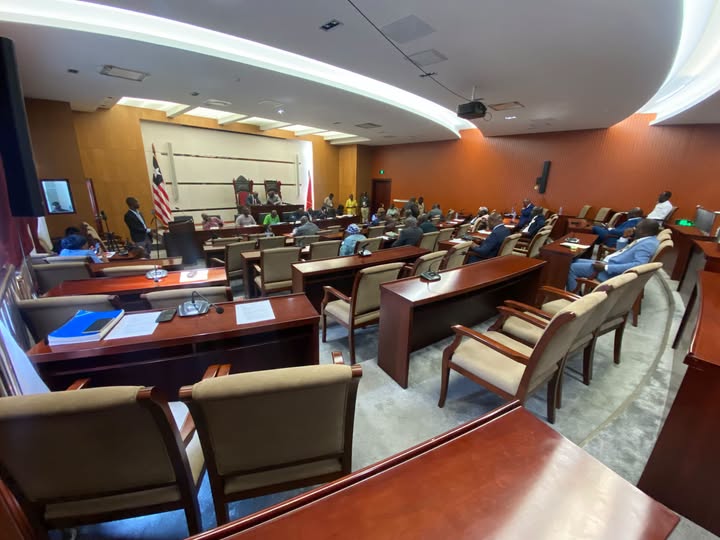
The implementation of previous audit recommendations is equally important. The General Auditing Commission's follow-up reporting has documented persistent gaps in the implementation of audit recommendations across public institutions. Creating new rules without ensuring that existing findings are addressed risks reproducing the same weaknesses under a revised institutional framework. As the Joint Committee on Good Governance and State-Owned Enterprises begins its two-week review, lawmakers have an opportunity to examine the proposed amendment beyond its stated objectives.
They should seek clarity on how financially distressed enterprises will be identified, who will authorize restructuring or privatization, what safeguards will govern the disposal of public assets, and how citizens will be informed about the financial performance of enterprises they ultimately own.
The committee should also examine whether SEAL will have the authority, resources and independence to enforce compliance, including against enterprises with significant political or economic influence.
Ultimately, Liberia does not need another oversight institution that exists primarily on paper. It needs a system in which public enterprises account for their money, disclose their obligations, demonstrate measurable performance and deliver value to the people.
The proposed amendment could provide an opportunity to strengthen that system. But the measure of success will not be the number of new provisions inserted into the law. It will be whether public assets are better managed, financial losses are reduced, accountability improves and citizens receive greater value from the enterprises operating in their name.
Beyond the Headlines, this is the Bigger Picture.