Live

The Tape That Never Stopped Playing: Liberia Revisits the Ghost of Samuel Doe

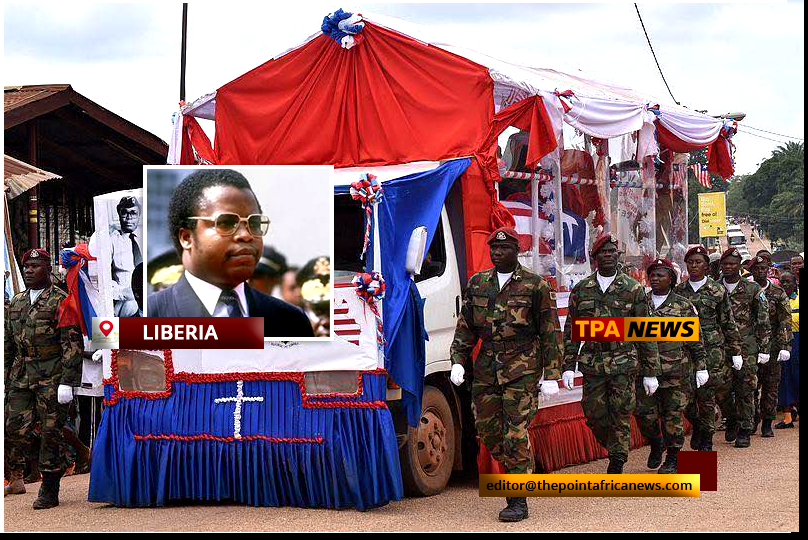
The red dust rose in quiet spirals over the grounds of the 14 Military Hospital outside Monrovia, as a plain white coffin—simple, unadorned—was lowered gently from a hearse. Few words were spoken. The body inside had long belonged to history. But for the first time in 35 years, it belonged to peace. Samuel Kanyon Doe—Liberia’s […]

Author

Staff Writer • 5 min read

Friday, 27 June 2025 27 Jun 2025
Share𝕏f
The Tape That Never Stopped Playing: Liberia Revisits the Ghost of Samuel Doe

The red dust rose in quiet spirals over the grounds of the 14 Military Hospital outside Monrovia, as a plain white coffin—simple, unadorned—was lowered gently from a hearse. Few words were spoken. The body inside had long belonged to history. But for the first time in 35 years, it belonged to peace.

Samuel Kanyon Doe—Liberia’s 21st president, its first indigenous head of state, and one of its most controversial figures—is finally being laid to rest.

His reburial in 2025 has not only stirred deep emotion across the country—it has reopened a wound many believed had long since scarred over.

The Young Soldier Who Dared: In 1980, Samuel Doe was a 28-year-old master sergeant from Grand Gedeh with little formal education but an unshakable belief that power should no longer be the domain of Monrovia’s Americo-Liberian elite. On April 12, he led 16 soldiers into the Executive Mansion, killing President William R. Tolbert in his pajamas. That night, for the first time in 133 years, indigenous Liberians felt the state was truly theirs.

“I did it for the people,” Doe would later say. But for many, what followed felt like a betrayal of that promise.

He declared himself president, abandoned civilian rule, and surrounded himself with loyalists. Dissent was punished brutally. Ethnic favoritism, especially toward his Krahn people, widened fault lines. And when he lost the 1985 election to Jackson Doe, he simply refused to step down.

The Tape That Never Stopped Playing: In September 1990, at the height of Liberia’s first civil war, Doe walked into the ECOMOG peacekeepers’ base hoping for refuge. Instead, he was captured by Prince Johnson’s rebel forces. What came next shocked the world: Doe was filmed being tortured—ears sliced off, blood pouring—while Johnson sipped beer in the background.

The tape spread like wildfire. It became the dark origin myth of Liberia’s descent into chaos. For many Liberians, it was the first time they’d seen death politicized on screen. It wasn’t just a man dying—it was a nation unraveling.

His remains were hastily buried near Monrovia, without ceremony, honor, or closure. And for more than three decades, his ghost lingered in Liberia’s collective memory—feared by some, mourned by others, ignored by many.

“We Want Closure”

Today, Doe’s family speaks not with bitterness, but with solemnity. “We want closure. We want the truth.” For them, the reburial is not political—it’s personal. It is the first time they will be able to grieve as a family, without shame, without whispers.

But it’s not just his kin who are watching.

Elders from Grand Gedeh see this as a long-overdue acknowledgment of a native son who, despite his flaws, shattered a system built to exclude them. Others are less forgiving.
Advertisement

Reach 2M+ pan-African readers

Advertise with us →

Burying Bones, Not Truth: The Truth and Reconciliation Commission (TRC), established in 2005, documented atrocities from all sides of the conflict. Doe’s name appears not just as a victim, but as a perpetrator. Yet justice has been elusive. None of the war’s major figures—Taylor, Johnson, or Doe’s own lieutenants—have been held to full account within Liberia.

The fear is that reburial may become rebranding.

In 2025, Liberia is not the same country Doe once ruled. Its youth are too young to remember the war, but they live with its aftershocks. The country’s institutions—though fragile—are democratic. Civil society is strong. The military is no longer a political pawn. And today, conversations once considered dangerous are happening in public, in classrooms, in cafes.

The reburial of Samuel Doe is one such conversation.

It is not the end of history. It is an invitation to re-read it. To ask: how did we get here? Who are our heroes? Who tells our story?

As the final prayer was whispered over the coffin, as the earth was packed firm over his remains, the country seemed to exhale—not in forgiveness, not in forgetfulness—but in acceptance.

If Liberia is to rise beyond the ghosts of its past, it must first be willing to look them in the face.

Editor’s Note:
Samuel Doe’s remains will be reinterred in Grand Gedeh County following exhumation from an undisclosed grave in Monrovia. The state’s role in the reburial—logistical but not ceremonial—has drawn mixed reactions. Memorial activities continue as the country watches closely, not just the burial, but the narrative it will leave behind.

By: TPA Staff Reporter | editor@thepointafricanews.com

Author

Written by

Staff writer at The Point Africa News.

Related Stories

Monrovia City Corporation Signs $1M Waste and Recycling Pact with U.S. Refuse Removal
Liberia

Monrovia City Corporation Signs $1M Waste and Recycling Pact with U.S. Refuse Removal

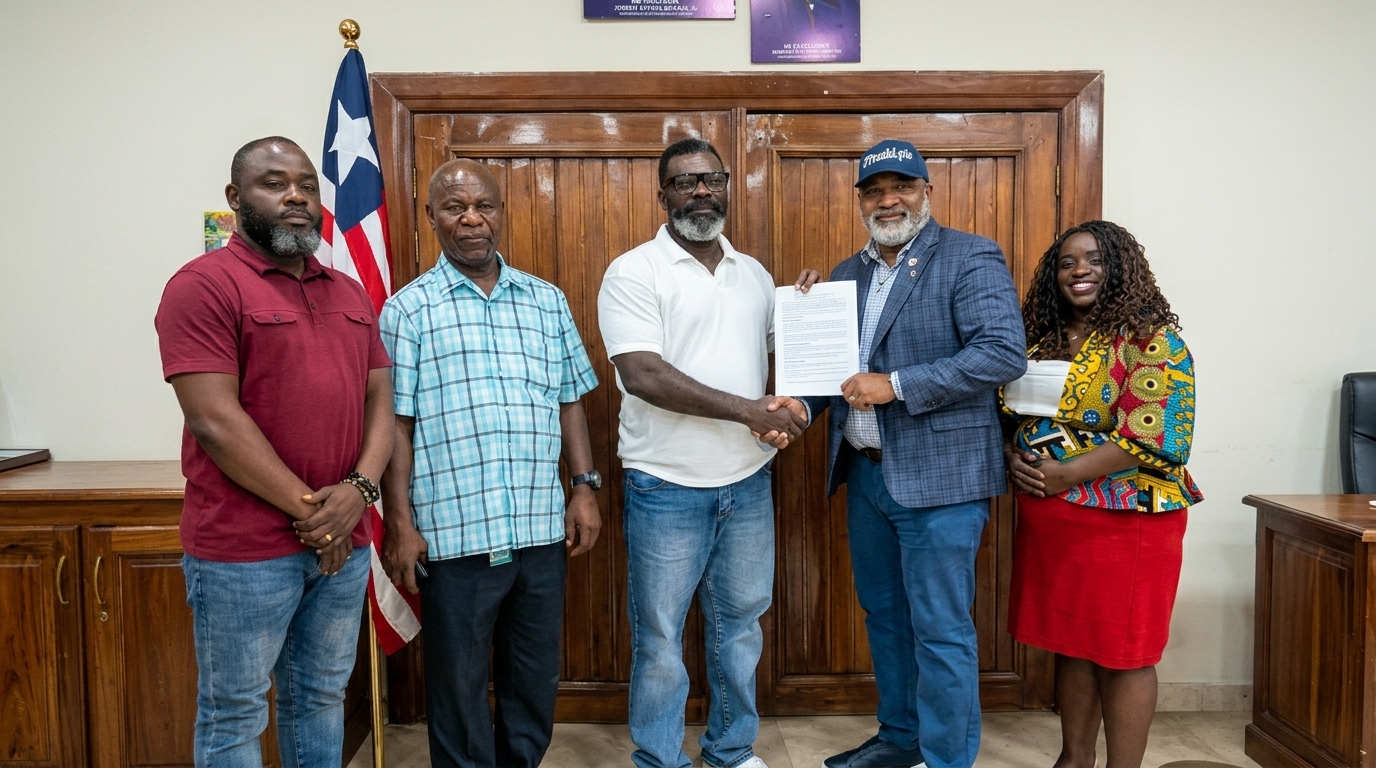
Seeking to tackle chronic municipal sanitation issues while driving job creation, the Monrovia City Corporation (MCC) signed a Memorandum of Understanding (MOU) for a $1 million waste management initiative with American firm U.S. Refuse Removal, Inc.

David S. Johnson•1d ago

Major Election Watchdogs Partner to Push Electoral Reforms Ahead of 2029 Polls
Liberia

Major Election Watchdogs Partner to Push Electoral Reforms Ahead of 2029 Polls

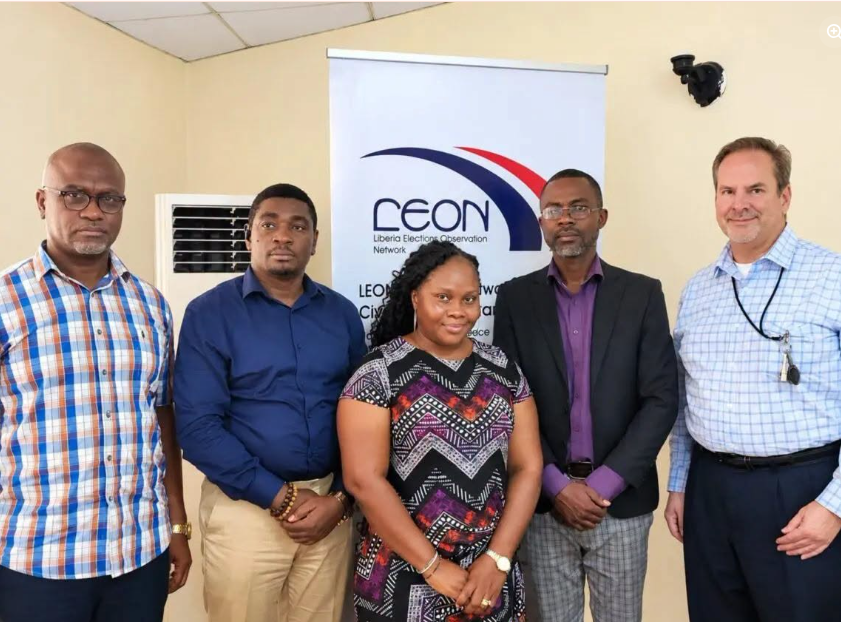
Two of Liberia’s leading domestic election observation networks, the Elections Coordinating Committee (ECC) and the Liberia Elections Observation Network (LEON), have signed a US$30,000 Memorandum of Understanding to pool technical expertise and advance structural electoral reforms ahead of the 2029 general elections.

David S. Johnson•1d ago

Press Union of Liberia Demands Comprehensive Overhaul of 1986 Constitution to Curb Imperial Presidency and Protect Civic Space
Liberia

Press Union of Liberia Demands Comprehensive Overhaul of 1986 Constitution to Curb Imperial Presidency and Protect Civic Space

GANTA, Liberia — Four decades after Liberia’s current constitution was drafted under military rule, the Press Union of Liberia (PUL) issued a sharp warning against elite political manipulation, demanding structural reforms to eliminate imperial presidential powers, close judicial loopholes, and entrench citizens' economic rights.

David S. Johnson•1d ago

Liberia Receives 304 Chinese Agricultural Machines as President Boakai Demands Action Over Rhetoric
Liberia

Liberia Receives 304 Chinese Agricultural Machines as President Boakai Demands Action Over Rhetoric

CAREYBURG, Liberia — In a direct challenge to his cabinet, President Joseph Nyuma Boakai declared that his administration will not rely on historical excuses, insisting instead on immediate execution as Liberia formally accepted a consignment of 304 agricultural machines from China.

David S. Johnson•1d ago

Enjoying our journalism?

Get the biggest African stories in your inbox every morning.

By subscribing you agree to our privacy policy. Unsubscribe anytime.