
By: TPA News Desk | Local Stories | www.thepointafricanews.com/africa
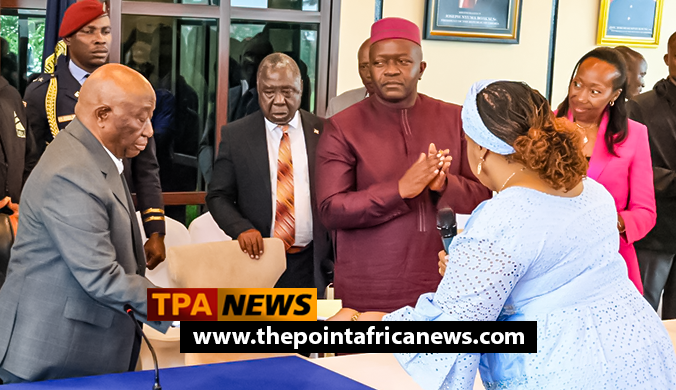
President Joseph Nyuma Boakai has officially launched the Excellence in Learning in Liberia (EXCEL) Project, a nationwide education initiative designed to significantly improve foundational literacy and numeracy among students in Liberia’s public early childhood and primary schools. The launch ceremony was held at the Executive Mansion in Monrovia and marks a major step in the government’s ongoing efforts to strengthen public education through the ARREST Agenda.
The EXCEL Project is being implemented by the Ministry of Education and is backed by a combined $88.7 million in international support. This includes a $60 million concessional credit from the International Development Association (IDA) of the World Bank and a $28.7 million grant from the Global Partnership for Education (GPE). The project is set to reach every public early childhood and primary school in all 15 counties and will directly benefit approximately 362,000 students, teachers, school leaders, and education staff across the country.
President Boakai described the launch as a declaration of his administration’s commitment to children’s learning and national development. “This is not just a project; it is a declaration of our commitment to the children of Liberia,” he stated. “The EXCEL Project is a key pillar in our ARREST Agenda and a direct response to the need for equitable, high-quality education for every Liberian child—especially in our public schools.”
According to the Ministry of Education, the project will provide improved teaching and learning materials to 350,000 students enrolled in early childhood education and Grades 1 to 6. It will also offer intensive training in foundational learning, school management, instructional leadership, and data use to 12,000 teachers and school principals. Furthermore, 14,000 members of school management committees and Ministry of Education staff at both county and central levels are expected to benefit from capacity-building support. The project is designed with a strong emphasis on inclusion, with nearly half of all direct beneficiaries expected to be female, in line with national efforts to promote gender equity in education.