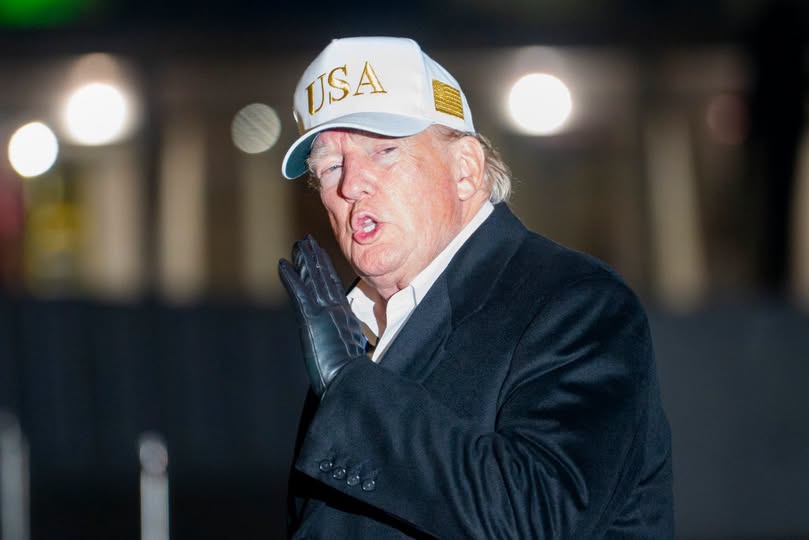
In an interview with CBS's 60 Minutes, broadcast on November 8, Trump said countries protected by the United States would have to repay Washington for "any and all costs" incurred during the war. He insisted that the money would be recovered, explicitly including Israel in a demand previously directed at several Gulf countries.
The remarks come as the financial cost of the conflict continues to attract scrutiny in Washington. A Pentagon estimate put US military spending on the war at approximately $47.1 billion as of October 16. The figure includes the cost of replacing expended ammunition, military operations and equipment losses, but excludes damage to American military bases in the region.
Trump's demand presents an unusual interpretation of international security partnerships. For decades, the United States has maintained military alliances and security arrangements across the Middle East, presenting its presence as part of a broader strategy to protect regional interests, deter adversaries and preserve access to strategically important trade and energy routes.
The president's latest remarks suggest a more transactional approach: countries benefiting from American military protection should also assume the financial costs associated with it. But the circumstances of the Gulf countries make that proposition complicated.
Saudi Arabia, the United Arab Emirates, Qatar, Bahrain and Kuwait were among the countries previously identified by Trump as beneficiaries of American protection. Yet these countries did not jointly launch the US-Israeli military campaign against Iran. Gulf governments have also faced Iranian retaliatory attacks, economic disruption and threats to critical infrastructure during the conflict.
Asking them to reimburse Washington for the war therefore raises a difficult question: should countries that suffered the consequences of a conflict also be expected to finance the military campaign that helped trigger those consequences? Israel occupies a different position. It was a direct participant in the military campaign alongside the United States and has historically received substantial American military assistance. Trump's comments could signal a willingness to reconsider that relationship, although no specific repayment agreement or financial settlement has been announced.
The demand also comes at a time when the war's domestic political costs are becoming increasingly difficult for the Trump administration to ignore. Rising military expenditure and energy prices have contributed to public dissatisfaction, while the conflict has become an issue in the recent US midterm elections.
For Washington, seeking reimbursement could therefore serve two purposes: reducing the political burden of military spending and reinforcing Trump's argument that American allies must contribute more to their own security.
However, analysts cited by Al Jazeera have questioned whether the demand represents a practical policy proposal or political signalling. Any eventual arrangement could take the form of additional defence purchases, investment commitments or other economic concessions rather than direct repayment to the US Treasury. Such arrangements would not necessarily recover the actual cost of the war.
For African countries, the significance of this development is not limited to diplomatic relations between Washington and its Middle Eastern partners. The conflict has demonstrated how decisions made by powerful countries can impose economic consequences on nations with little influence over the decisions themselves.
The disruption of shipping through the Strait of Hormuz has placed pressure on global energy markets. The International Energy Agency estimates that roughly one-quarter of the world's seaborne oil and one-fifth of its liquefied natural gas normally pass through the strategic waterway.
For African economies that depend heavily on imported petroleum products, prolonged instability in the region can translate into higher fuel costs, increased transport expenses, pressure on electricity generation and more expensive imported goods.
The International Monetary Fund has previously warned that energy-importing economies in Africa face higher import bills when global fuel prices rise, often with limited fiscal capacity to absorb the shock.
There is also a wider diplomatic lesson. Trump's position suggests that longstanding security relationships may increasingly be judged through direct financial calculations. Countries that rely on external military assistance, including African governments engaged in security partnerships with major powers, have reason to pay attention to how these relationships are structured and what financial or political expectations accompany them.
This does not mean that African security partnerships are directly comparable to America's arrangements in the Middle East. But it reinforces the importance of transparency, clearly defined obligations and a realistic assessment of the long-term costs of external security dependence.
The central issue raised by Trump's demand is not simply whether Israel or the Gulf states will eventually pay Washington. It is whether military protection should be treated primarily as a shared international security commitment or as a service for which beneficiaries must reimburse the protecting power.
American officials have yet to present a detailed mechanism for collecting the proposed payments, and the countries concerned have not entered into a publicly announced agreement to reimburse the United States for the full cost of the war.
Nevertheless, the statement offers a revealing insight into the direction of American foreign policy under Trump: strategic relationships are increasingly being discussed in terms of financial returns, burden-sharing and immediate national interests.
For countries across Africa and the developing world, the bigger question is how to protect their own economic and security interests in an international system where the costs of geopolitical decisions are often distributed far beyond the countries making them.
The consequences of the Iran war may eventually be measured not only in military expenditure and damaged infrastructure, but also in the changing expectations placed on allies, the stability of global energy markets and the economic pressures transferred to countries that had little say in the conflict. That is the bigger picture.