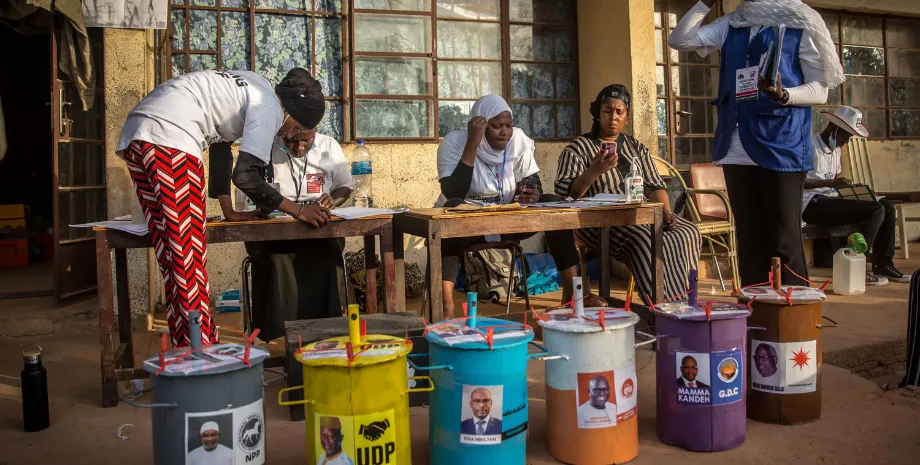
Leading the confirmed lineup is incumbent President Adama Barrow of the National People's Party (NPP), who is seeking a controversial third term. Although constitutional reforms were widely expected to introduce presidential term limits following Barrow's 2016 victory over longtime ruler Yahya Jammeh, lawmakers repeatedly rejected draft constitutions, leaving the 1997 charter—and Barrow's eligibility—intact.
Challenging the president are his former vice president and main opposition leader, Ousainou Darboe of the United Democratic Party (UDP), alongside former Kanifing Municipal Council mayor Talib Ahmed Bensouda. Darboe, who previously served in Barrow's cabinet before breaking ranks, is mounting another bid to unseat the incumbent after finishing as runner-up in prior elections.
Meanwhile, Bensouda—who left the UDP last year to form the Unite Movement for Change (UMC)—has rapidly emerged as a formidable force among young voters, drawing massive crowds by tapping into widespread public frustration over prolonged power blackouts and economic pressures. Bensouda stepped down as mayor just days before his nomination after a government audit accused him of financial impropriety, a move his party dismissed as a politically motivated attempt to disqualify him from the race.
Rounding out the first batch of confirmed contenders are independent candidate Dr. Isatou Touray and Modou Lamin Sima of the Alliance of Progressive Citizens (APC). A physician and former vice president, Touray makes history as the first woman ever cleared to run for the Gambian presidency.
While the IEC formally rejected the bids of Gambia Labour Party aspirant Bakusa Dukureh and National Democratic Party leader Kebba Bojang, commission officials noted that final decisions on five remaining hopefuls—including independent parliamentarian Bakary K. Badjie, National Unity Party leader Lamin J. Darbo, Almameh Gibba, Papa Secka, and Ebrima Tabora Manneh—will be announced as the November 14 nomination window closes.